









Engineering Plastics

Custom PVC CNC Machining Service

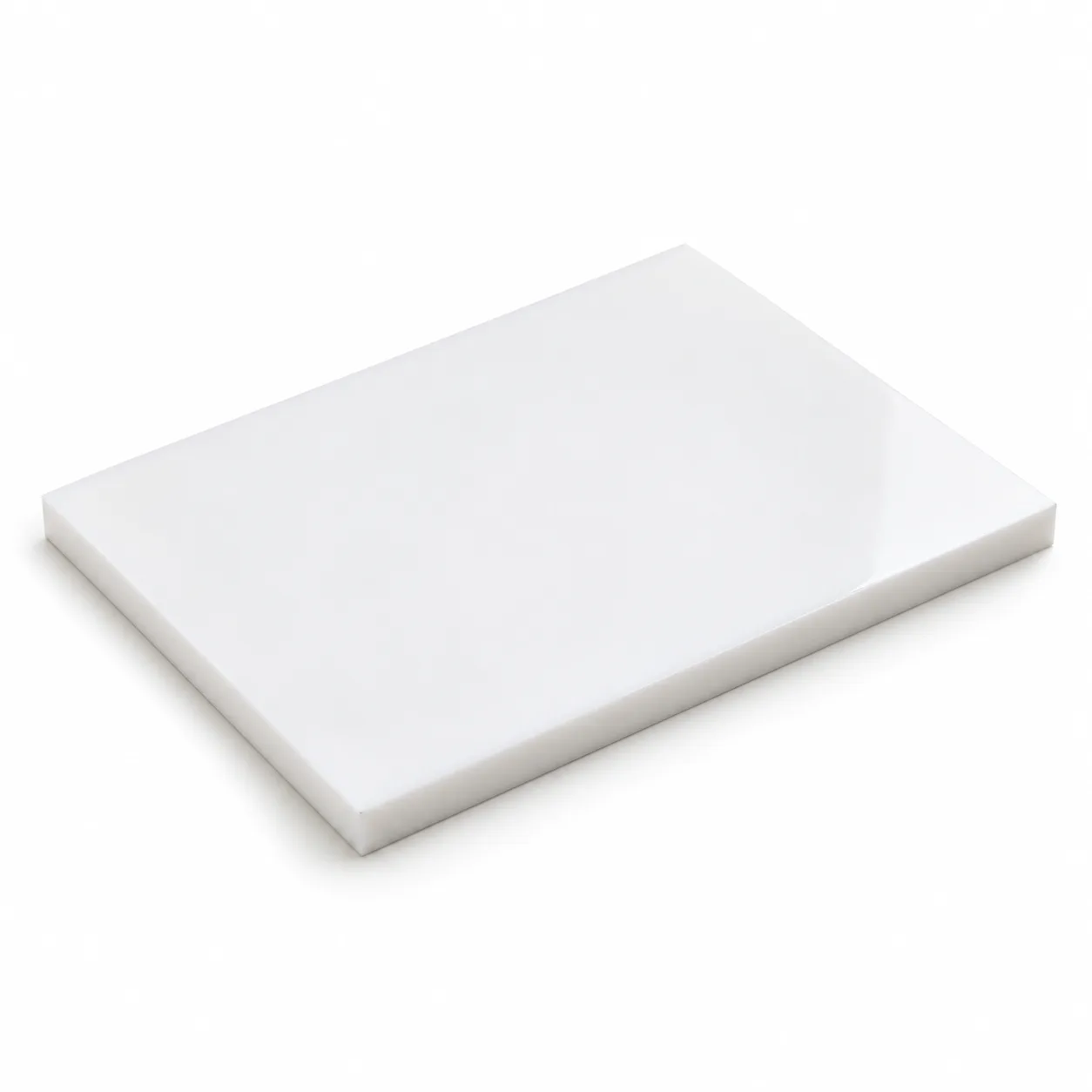
BatchMach Precision manufactures custom components from rigid PVC sheet, rod, tube, and block. We control cutting heat, chip evacuation, tool condition, and clamping pressure to reduce melted burrs, dimensional movement, and surface damage during machining. From one-off prototypes to repeat production, we provide factory-direct pricing, no minimum order quantity, and worldwide delivery.

  • Machining accuracy down to ±0.005 mm
  • Lead times as fast as 1 day
  • No MOQ, from prototypes to production
  • Rigid PVC, clear PVC, and CPVC machining
  • Factory-direct pricing and global delivery
Custom PVC CNC Machining Service part

Upload Your CAD Files for a Quote

Drop your CAD file here or click to browseSupported: STEP, STP, IGES, SLDPRT, DXF, DWG, PDF

Your files are secure and confidential · Max file size: 100 MB

19+

Years of Experience

250+

Machines & Testing Equipment

11,000 m²

Manufacturing Area

200+

Skilled Staff

ISO

9001 / 13485 / AS9100D

From prototypes to repeat production, BatchMach Precision brings together two ISO-certified CNC factories, practical machining expertise, and dimensional inspection to deliver custom parts built to your drawings.

Trusted by
numerous companies

Our Custom PVC CNC Machining Capabilities

Rigid PVC is relatively stiff and machinable, but excessive cutting heat can soften the material and produce melted burrs or dimensional changes. PVC Type I, Type II, clear PVC, and CPVC also differ in impact strength, service temperature, chemical compatibility, and stock availability. BatchMach Precision confirms the material grade and operating requirements before production.

PVC CNC Milling

PVC CNC Milling

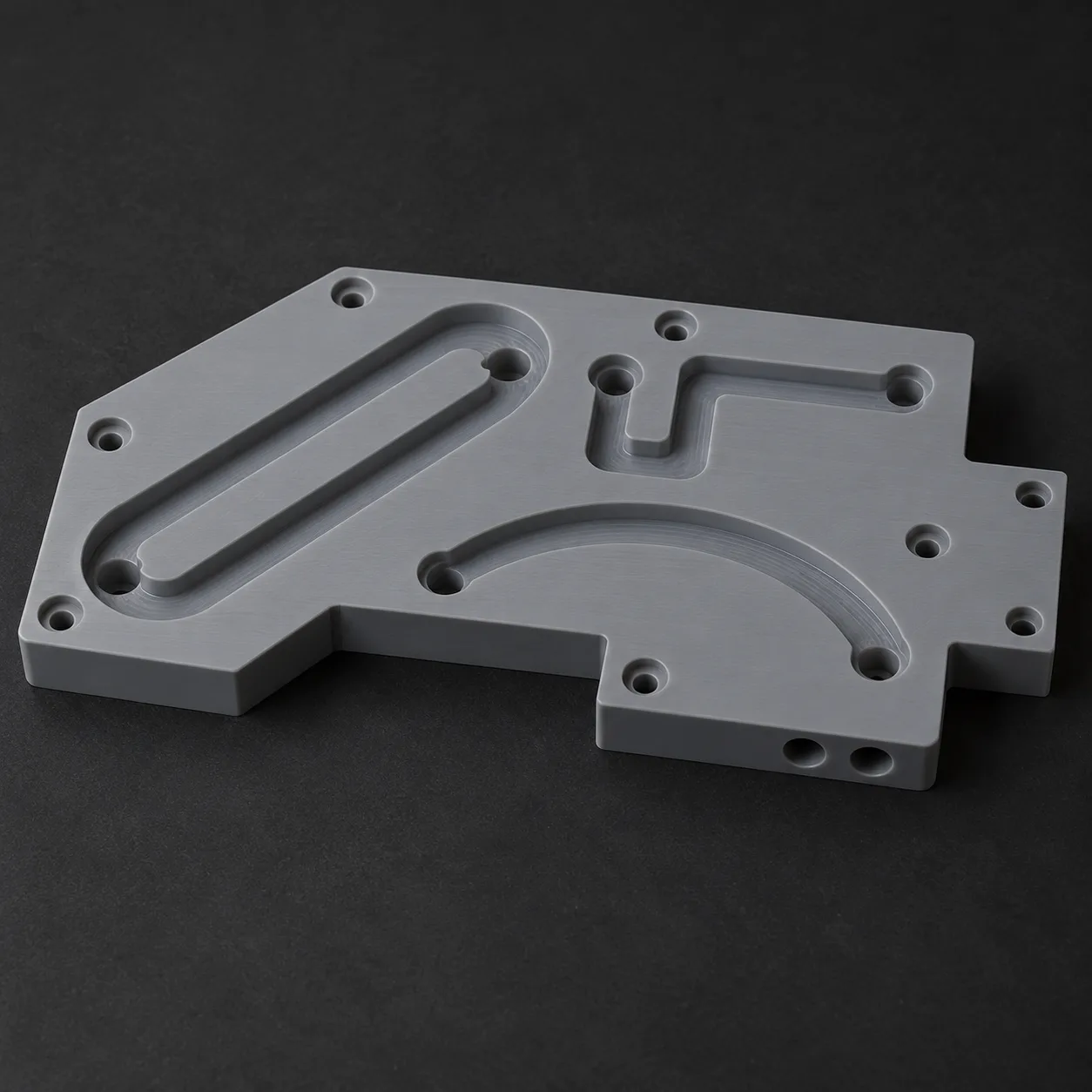
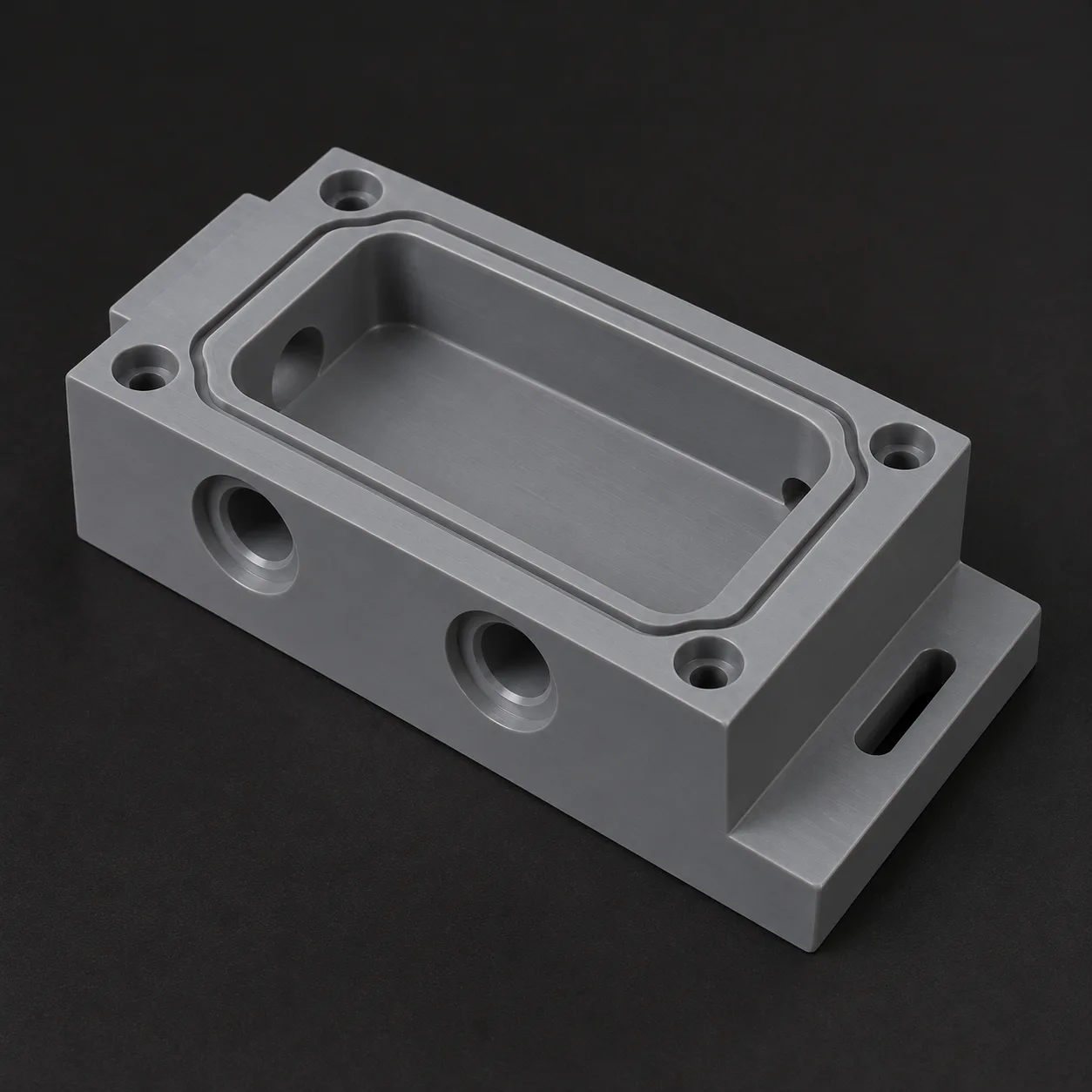
Our 3-axis, 4-axis, and horizontal machining capabilities support PVC parts with pockets, holes, slots, sealing surfaces, and multi-sided features. Sharp tools, adequate chip clearance, and controlled cutting parameters help limit heat buildup and maintain clean edges.
PVC CNC Turning

PVC CNC Turning

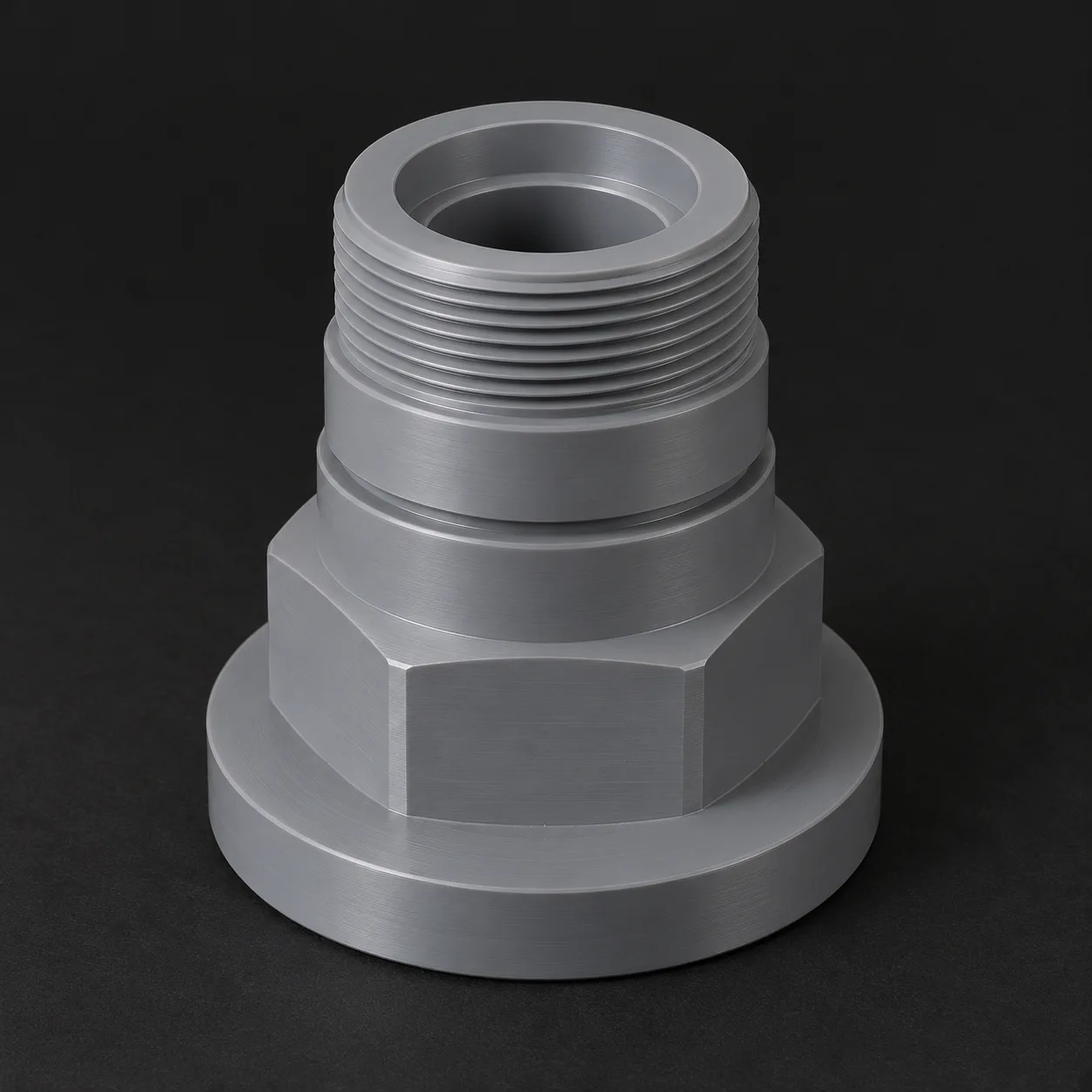
CNC turning is used to manufacture cylindrical PVC parts from rod or tube, including outside diameters, bores, grooves, threads, and sealing features. BatchMach Precision controls chuck pressure, tool condition, cutting heat, and part support to reduce deformation, melted burrs, and damage to thin-wall sections.

5-Axis PVC CNC Machining

5-Axis PVC CNC Machining

Five-axis machining is suitable for PVC components with angled holes, multiple sealing faces, complex contours, or strict positional relationships. Reducing unnecessary setups helps maintain feature alignment and limits repeated handling of clear or appearance-critical surfaces.

Prototype to Production PVC Machining

Prototype to Production PVC Machining

BatchMach Precision supports one-off prototypes, replacement parts, low-volume batches, and repeat production with no MOQ. For production orders, we can optimize stock selection, workholding, toolpaths, and machining sequences after the PVC grade, quantity, tolerances, and inspection requirements are confirmed.

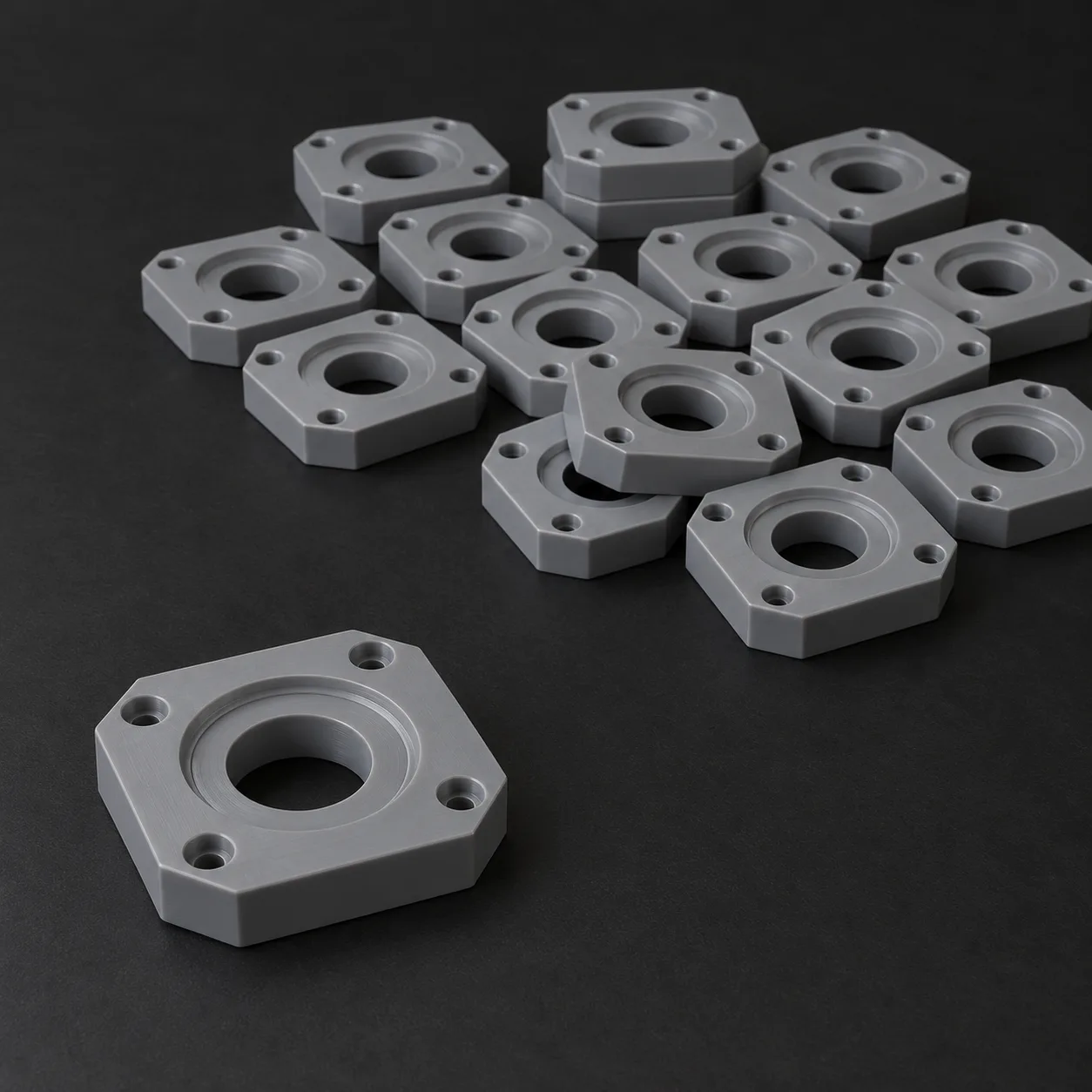
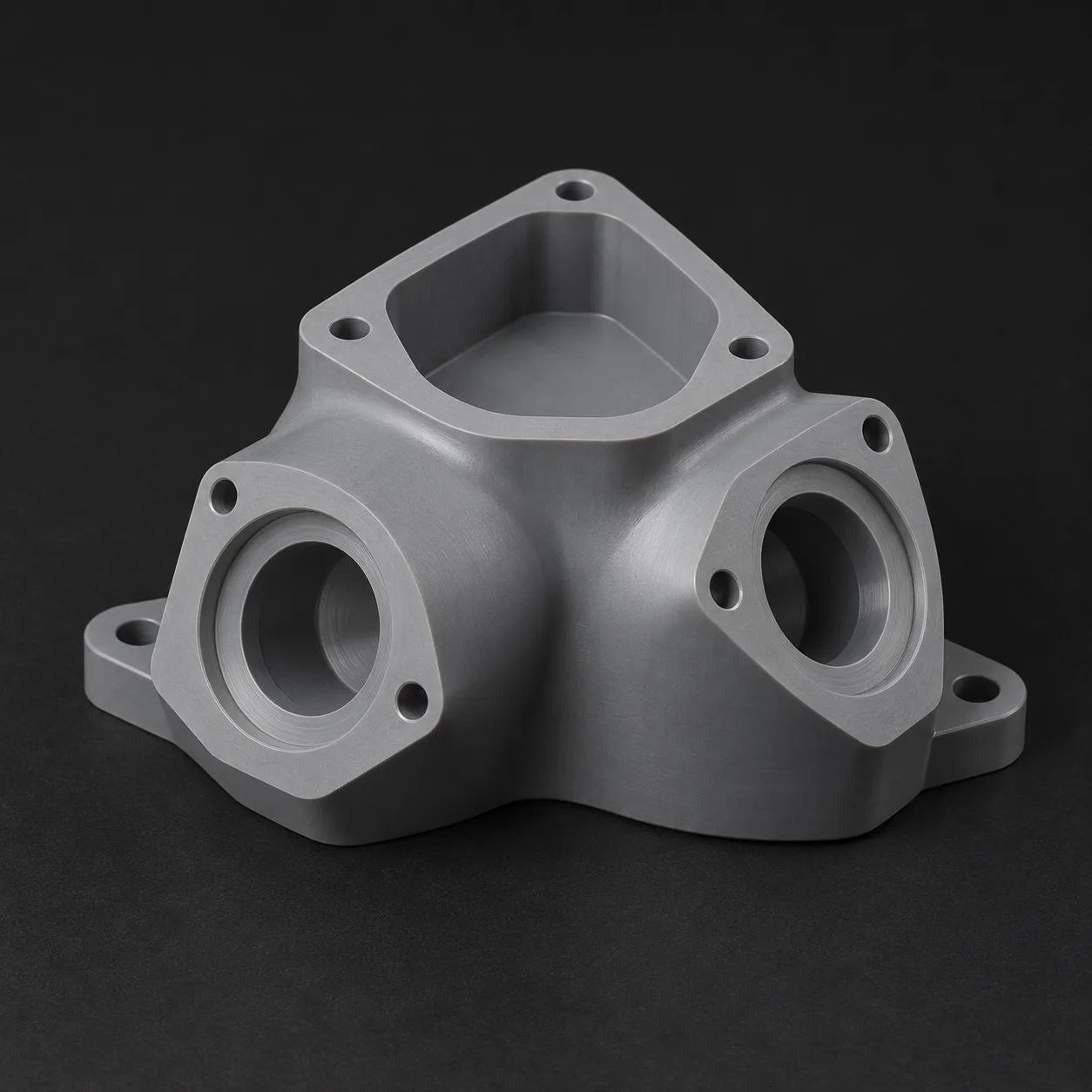
Representative CNC-machined PVC part

Polyvinyl Chloride (PVC) in CNC Machining

Rigid PVC is used for machined components that require stiffness, electrical insulation, low moisture absorption, and resistance to corrosion or selected chemicals. Common applications include valve and pump components, manifolds, electrical insulators, laboratory fixtures, equipment panels, spacers, and fluid-handling parts.

PVC grades should not be treated as interchangeable. Type I PVC is commonly selected for general industrial components, while Type II provides improved impact resistance. Clear PVC is used where visibility is required, and CPVC is considered for higher operating temperatures. BatchMach Precision reviews the material grade, chemical exposure, service temperature, wall thickness, fits, and drawing requirements before production.

ItemBatchMach Precision Capability
Lead TimeAs fast as 1 day
Machining AccuracyDown to ±0.005 mm
Maximum Part SizeMachine capacity up to 950 × 850 × 650 mm (L × W × H); actual PVC part size depends on stock availability, geometry, workholding, and tool access
PVC Material OptionsRigid PVC Type I, Type II, clear PVC, and CPVC, subject to stock availability

Compare PVC Materials for CNC Machining

PVC stock materials differ in rigidity, impact resistance, transparency, temperature capability, and machining behavior. The following values represent selected commercial grades and should be used for preliminary material selection—not as guaranteed properties for every PVC product.

Rigid PVC Type I

The usual starting point for manifolds, valve components, electrical insulators, fixtures, and parts used around compatible chemicals. It provides good rigidity and is widely available as sheet, rod, tube, and block.

Approx. 45–52 MPa

Tensile Strength, Yield

Approx. 2,800–3,000 MPa

Tensile Modulus

Approx. 88 MPa

Flexural Strength

HDT at 1.8 MPa: approx. 70°C

Published Thermal Reference

1.42–1.44 g/cm³

Density

*Clear PVC and CPVC values represent specific commercial stock grades. The CPVC temperature value is a published service-temperature rating rather than an HDT result, so it should not be compared directly with the other rows.

Surface Finishes for CNC-Machined PVC Parts

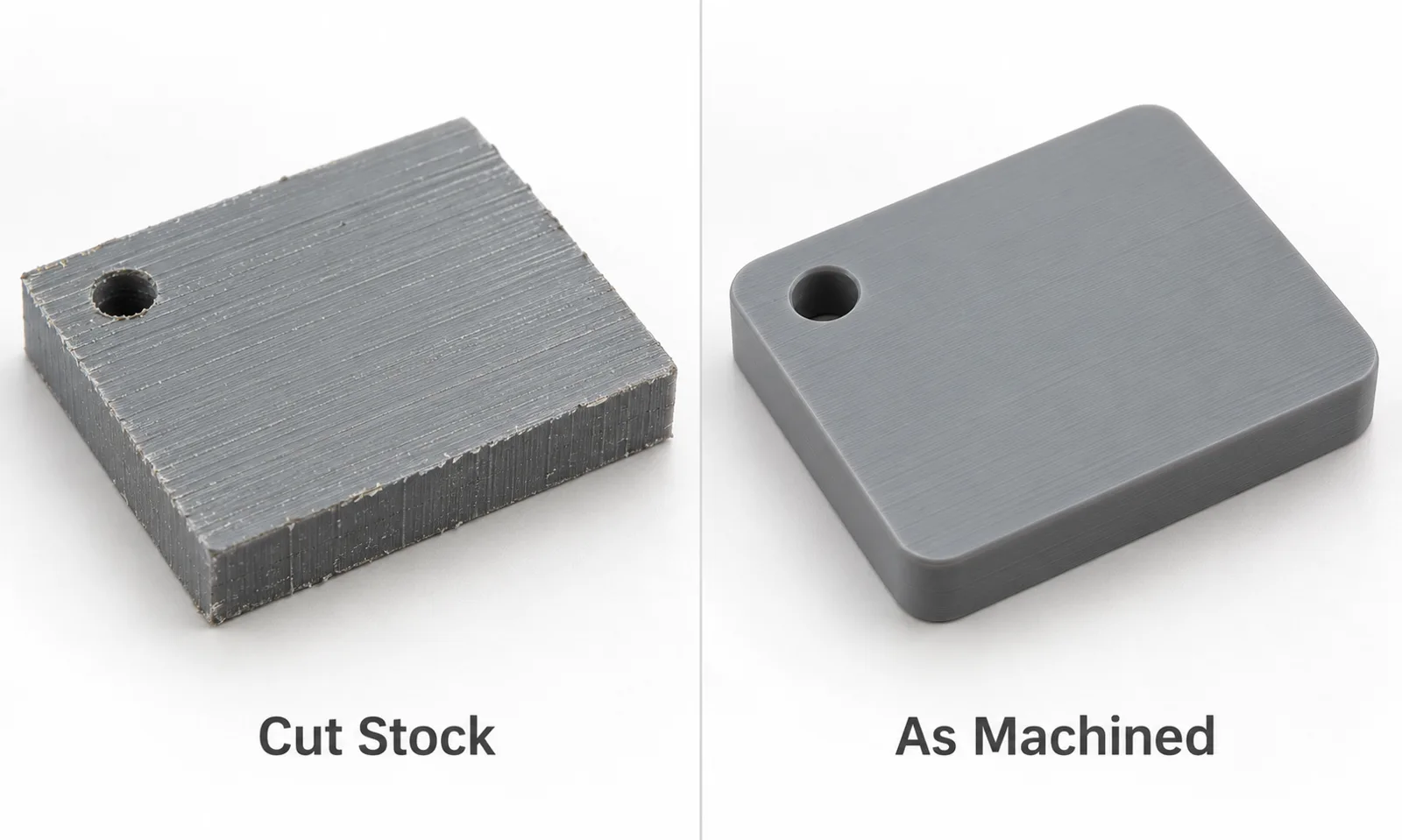
As Machined

As Machined surface finish sample

Keeps costs and lead times low while preserving the original machined dimensions.

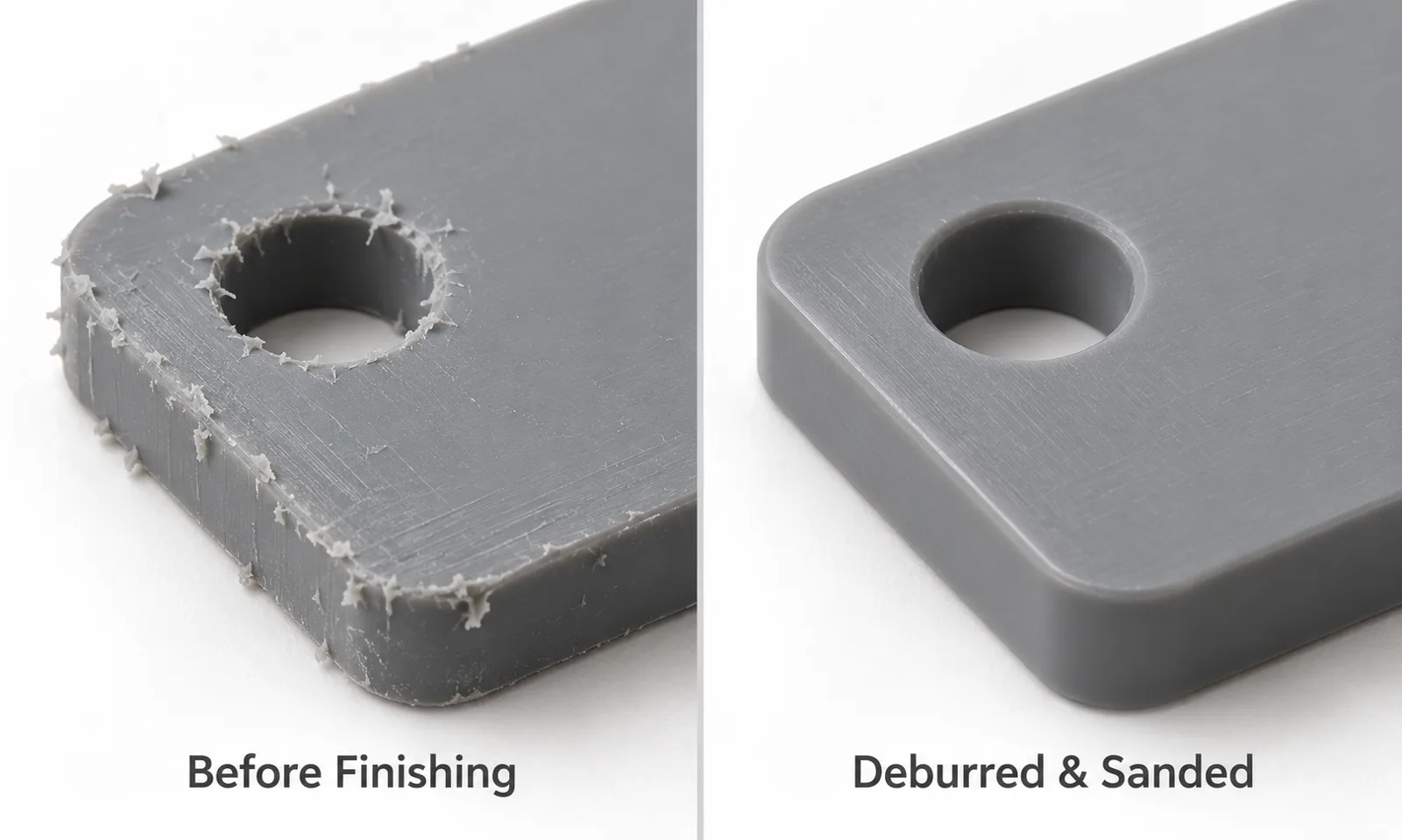
Deburring and Manual Sanding

Deburring and Manual Sanding surface finish sample

Removes sharp edges and burrs while reducing visible machining marks.

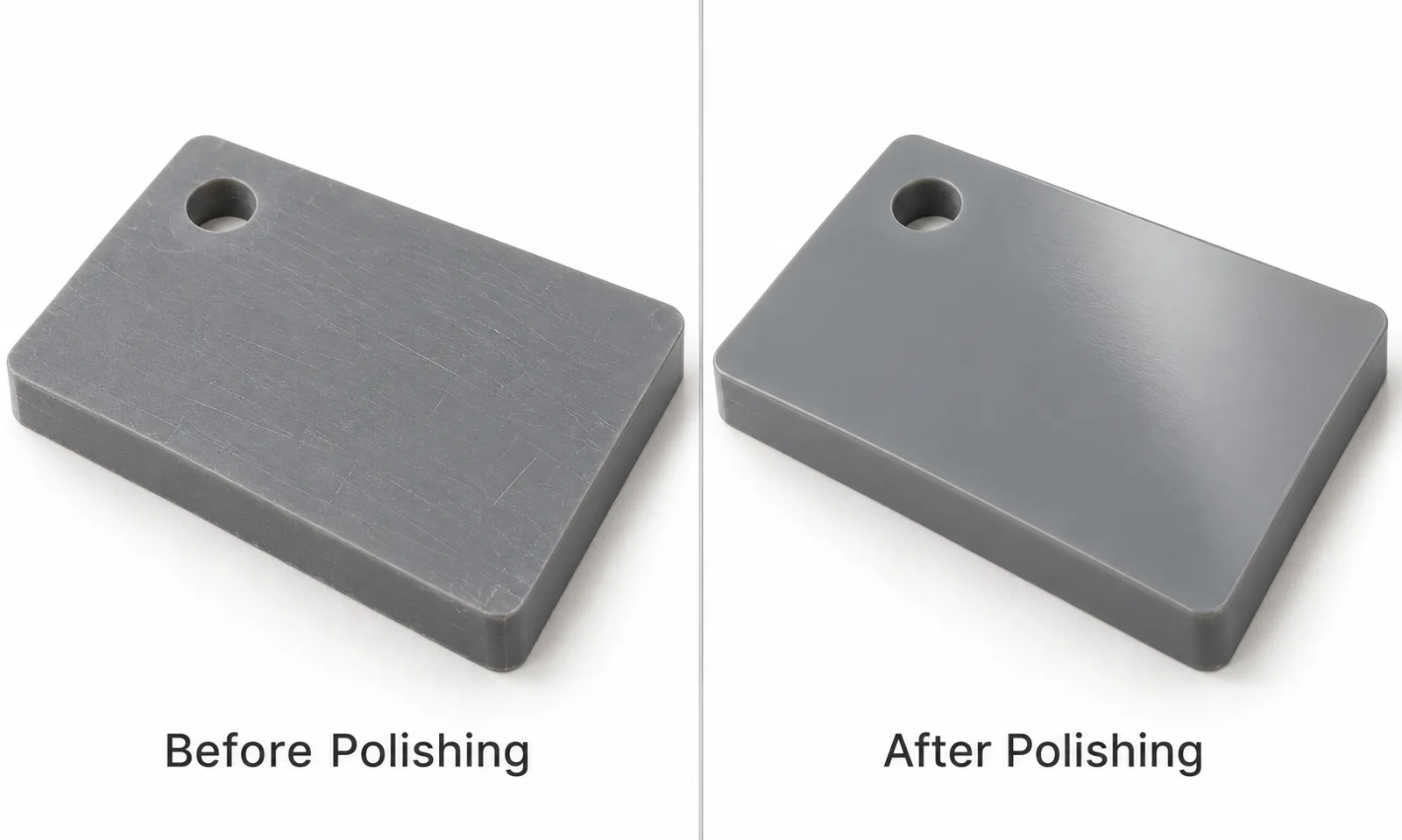
Mechanical Polishing

Mechanical Polishing surface finish sample

Improves surface smoothness, gloss, and the visibility of selected clear PVC areas.

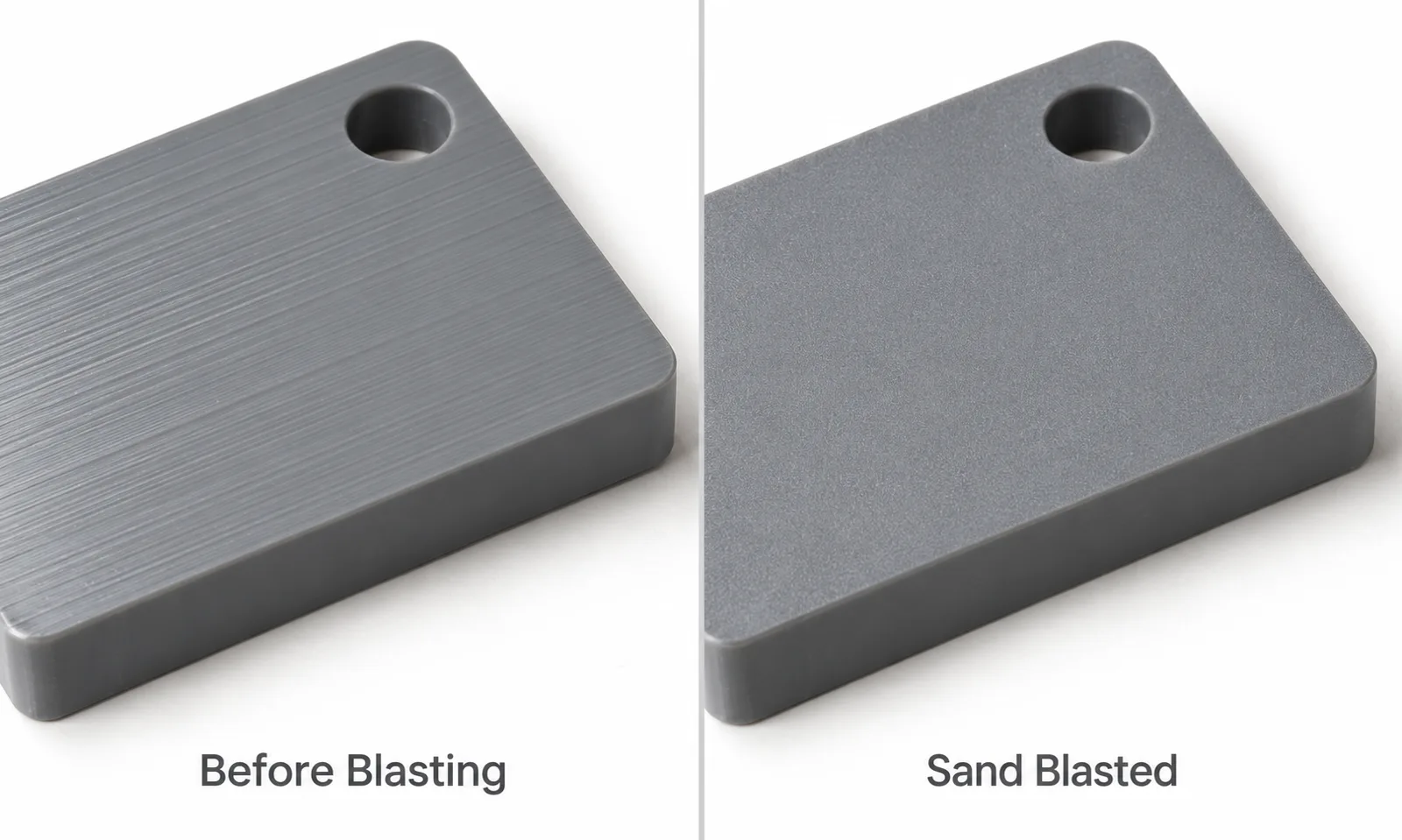
Sand Blasting

Sand Blasting surface finish sample

Creates a uniform matte texture, reduces glare, and makes light tool marks less noticeable.

Painting and Printing

Painting and Printing surface finish sample

Adds color, provides light blocking, and applies logos, scales, warnings, or part identification.

Design Guidelines for CNC-Machined PVC Parts

The values below are practical starting points for rigid PVC and CPVC parts, not universal machining limits. Final dimensions should be reviewed against the material grade, part size, workholding method, and tolerance requirements.

Design FeatureRecommended ValueReason
General wall thickness≥1.5 mm preferred; review walls between 0.8 and 1.5 mmThicker, uniform walls reduce clamping distortion, vibration, and edge chipping
Tall thin wallsKeep the height-to-thickness ratio ≤10:1Excessively tall walls can deflect under cutting forces and clamping pressure
Deep holesKeep hole depth ≤6× diameter; retract every 3–4× diameter for chip clearingTrapped chips increase frictional heat, dimensional variation, and melted burrs
Deep pocketsKeep pocket depth ≤4× cutter diameterDeeper pockets require longer tools, increasing vibration, chip-control problems, and sidewall marks
Internal corner radiiUse R≥1.0 mm and preferably at least one-third of the pocket depthLarger radii allow more rigid cutting tools and reduce stress concentration
ThreadsUse M3 or larger where possible; provide 1.5–2× diameter engagementLarger thread forms and sufficient engagement reduce stripping and edge damage
Hole-to-edge distanceKeep the hole center at least 1.5× the hole diameter from the edgeSufficient surrounding material reduces cracking and breakout during drilling
Large flat surfacesReview surfaces over 300 mm or flatness requirements below 0.10 mmStock stress, workholding, and temperature changes can affect final flatness
Dimensional measurementUse 20°C as the reference temperature and measure after unclampingThermal expansion and elastic recovery can affect measurements taken immediately after machining

PVC vs. CPVC for CNC Machining

PVC and CPVC are both available as machinable rigid plastic stock, but they should not be treated as interchangeable. Standard rigid PVC is generally selected for cost-effective components used at moderate temperatures, while CPVC is considered when higher operating temperatures are expected.

ComparisonRigid PVCCPVC
Typical published service temperatureAround 60°C, depending on gradeAround 85°C, depending on grade
Chemical resistanceSuitable for many acids, alkalis, and industrial fluidsOften selected for elevated-temperature chemical and fluid service
Material costGenerally lowerGenerally higher
Stock availabilityBroad availability in sheet, rod, tube, and blockMore limited sizes and grades
Machining behaviorMachines well with sharp tools and controlled cutting heatAlso machinable, but material cost makes process planning and scrap control more important
Common machined partsManifolds, insulators, covers, fixtures, valve components, and equipment partsHot-fluid components, chemical-handling parts, manifolds, valve components, and process-equipment parts

BatchMach Precision machines both rigid PVC and CPVC parts with no minimum order quantity. Final material selection is based on the drawing, operating conditions, required documentation, stock availability, and order quantity. Chemical resistance and temperature limits must be verified against the selected manufacturer’s grade—not the generic material name alone.

Choose PVC or CPVC

Choose PVC When

Choose rigid PVC when the component operates within the material’s temperature range and the project prioritizes rigidity, chemical compatibility, stock availability, and cost. It is a practical choice for prototypes, replacement parts, and production components used in moderate-temperature environments.

Choose CPVC When

Choose CPVC when the operating temperature is too high for standard PVC or when the application involves heated chemicals or process fluids. The exact fluid, concentration, pressure, temperature, and exposure time should be reviewed before the grade is confirmed.

Inside Our PVC CNC Machining Facility

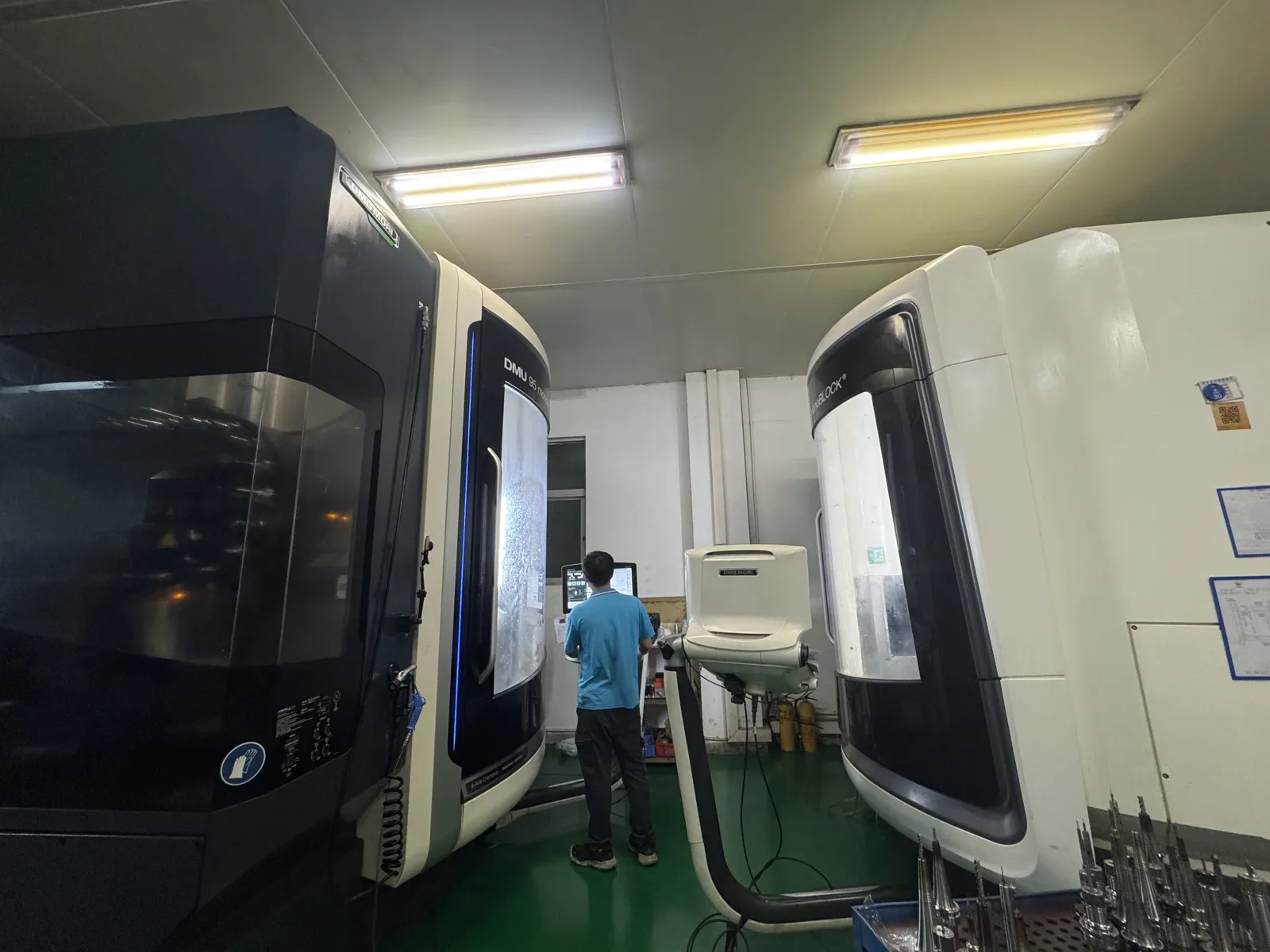
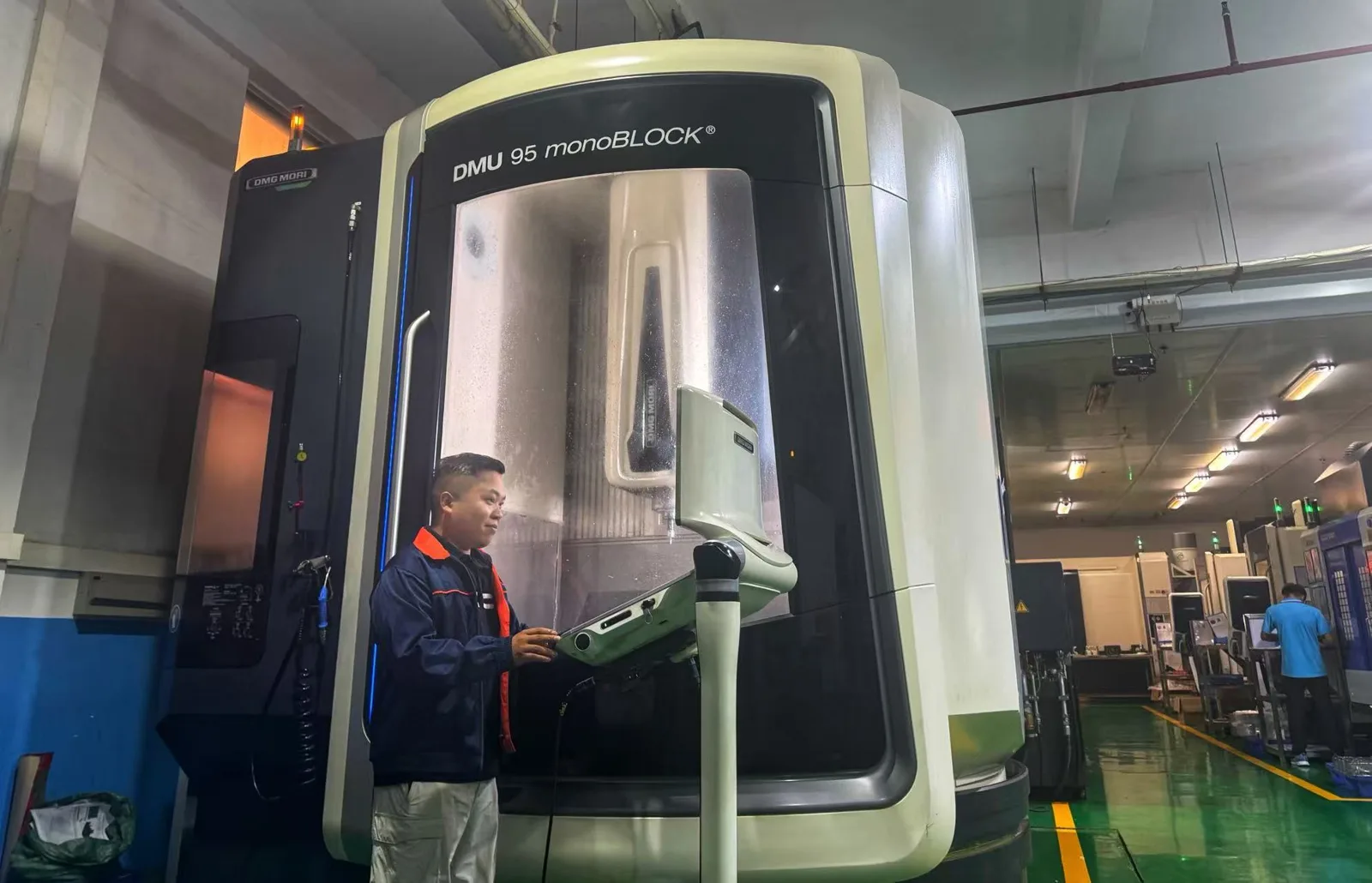
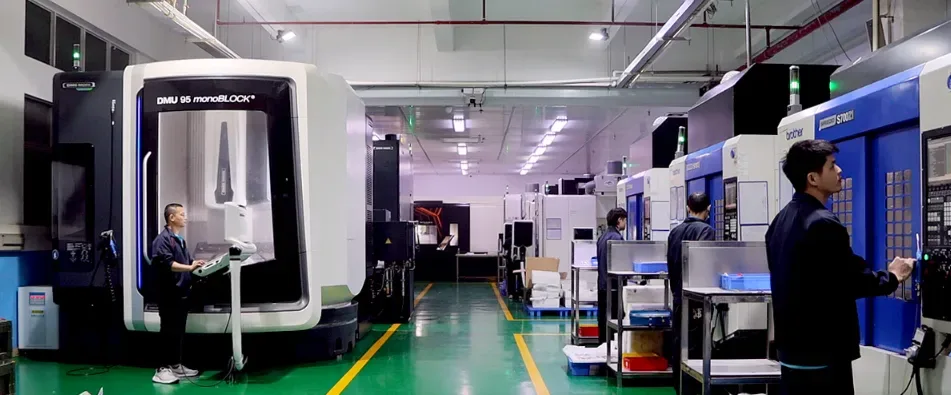
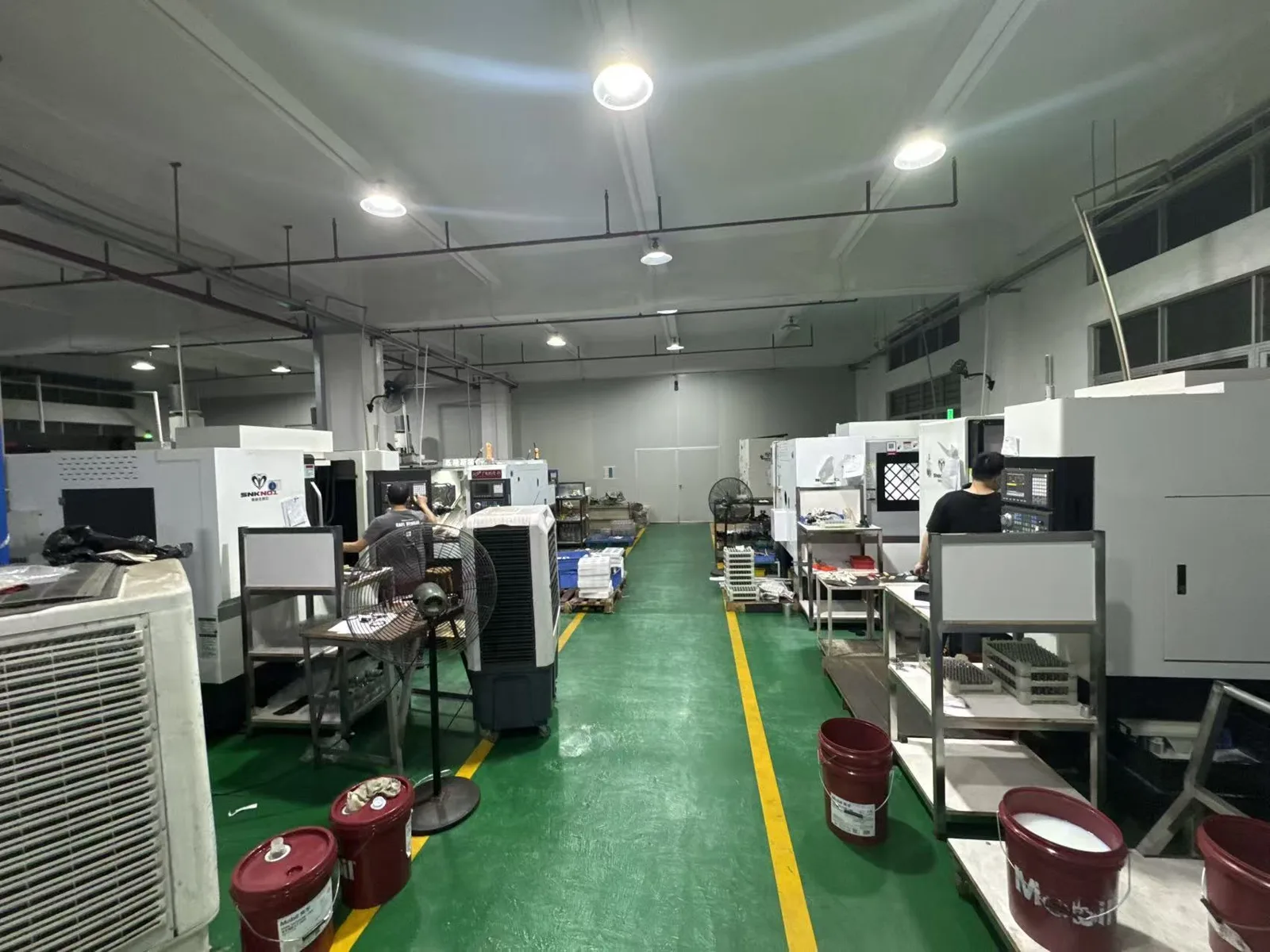
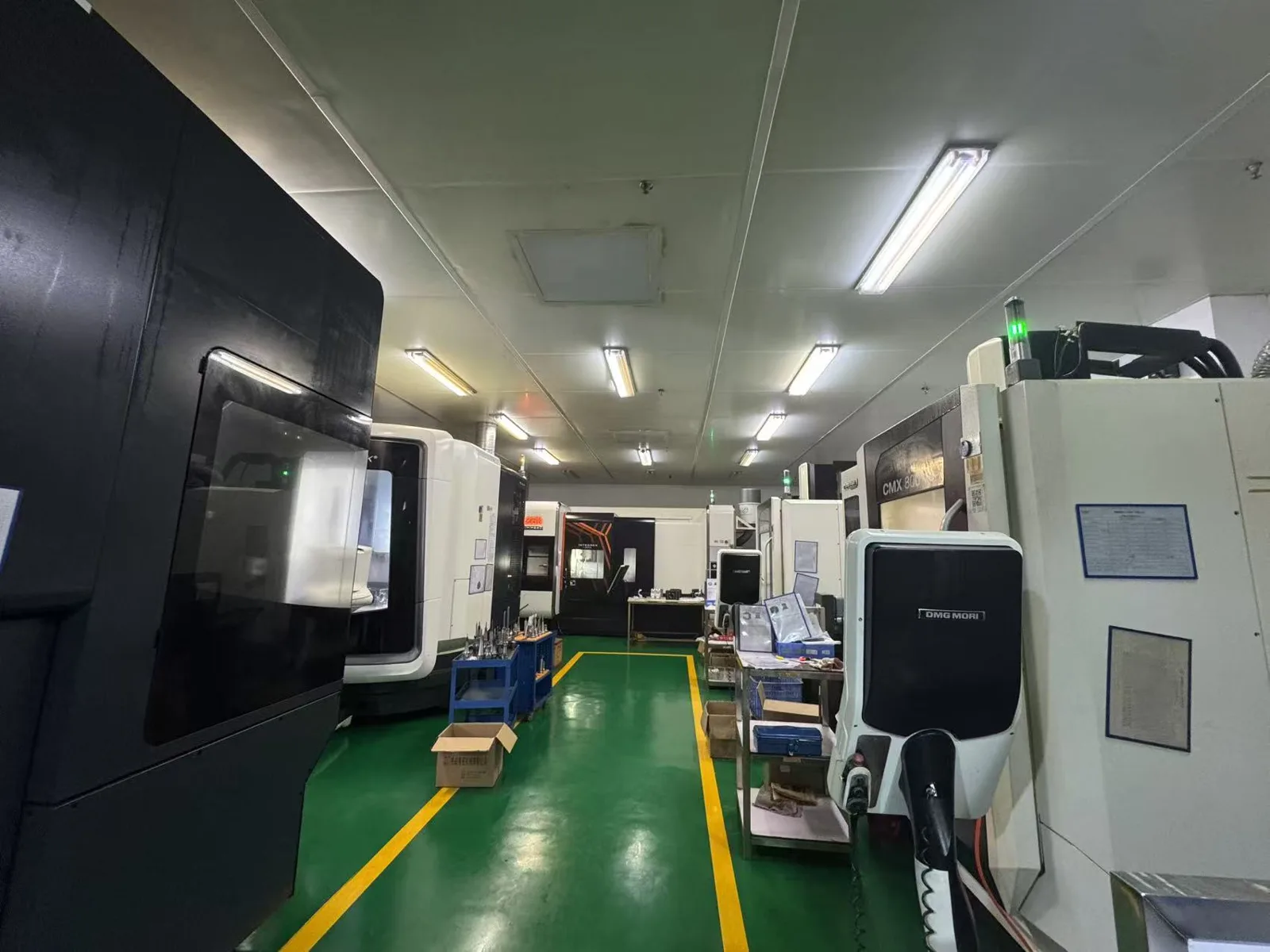
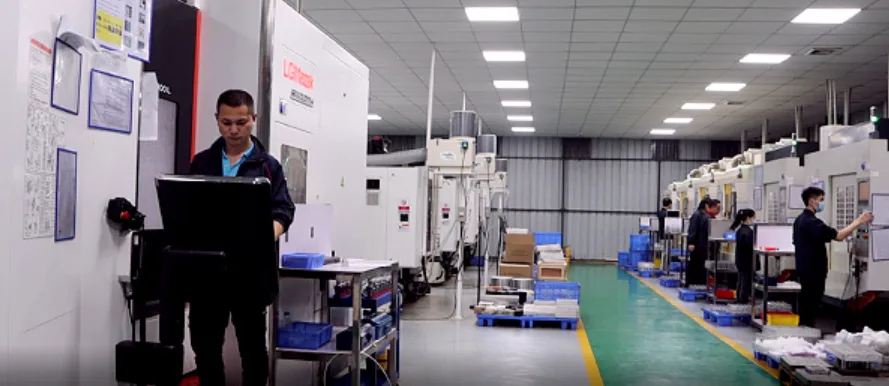
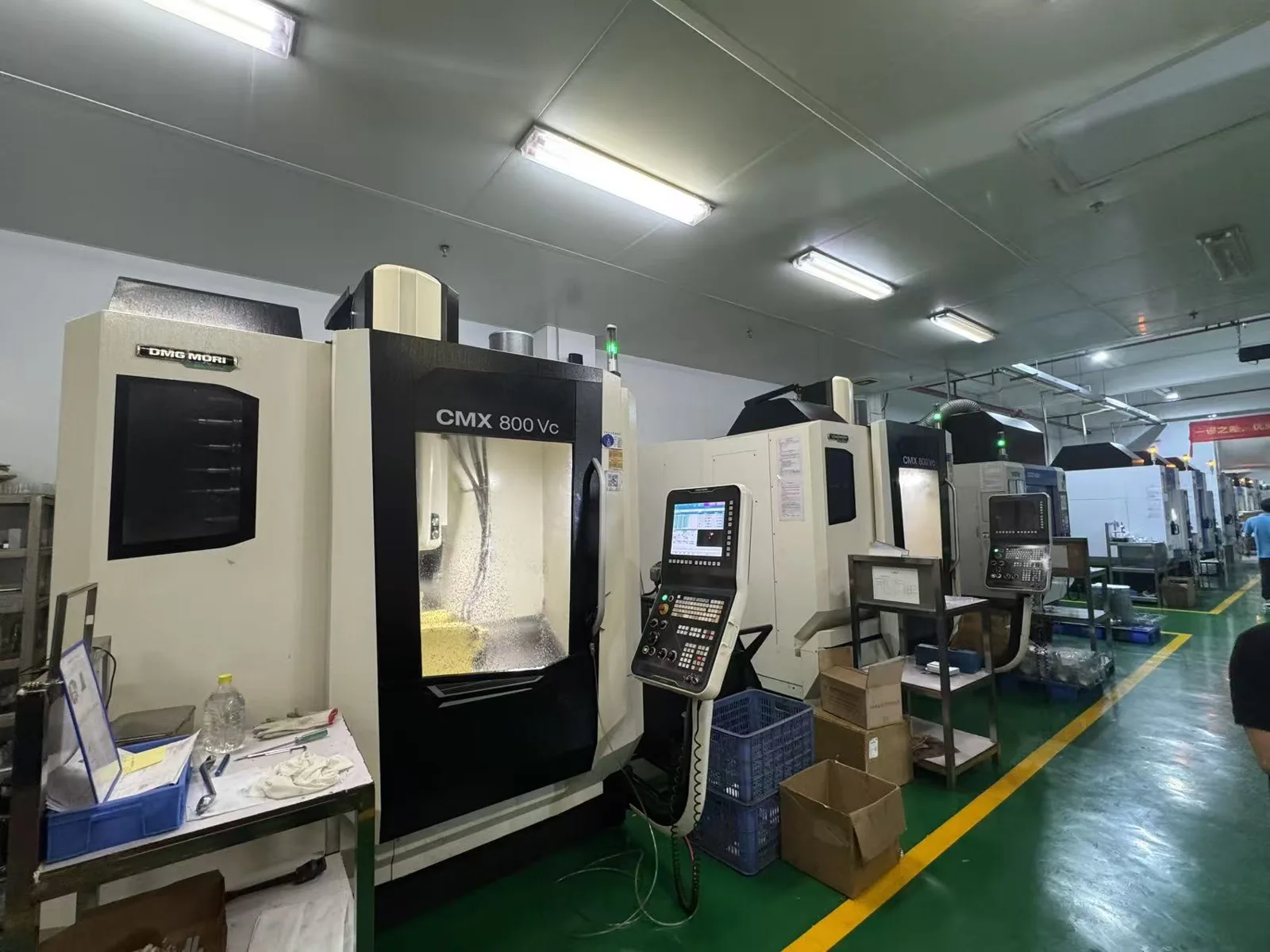
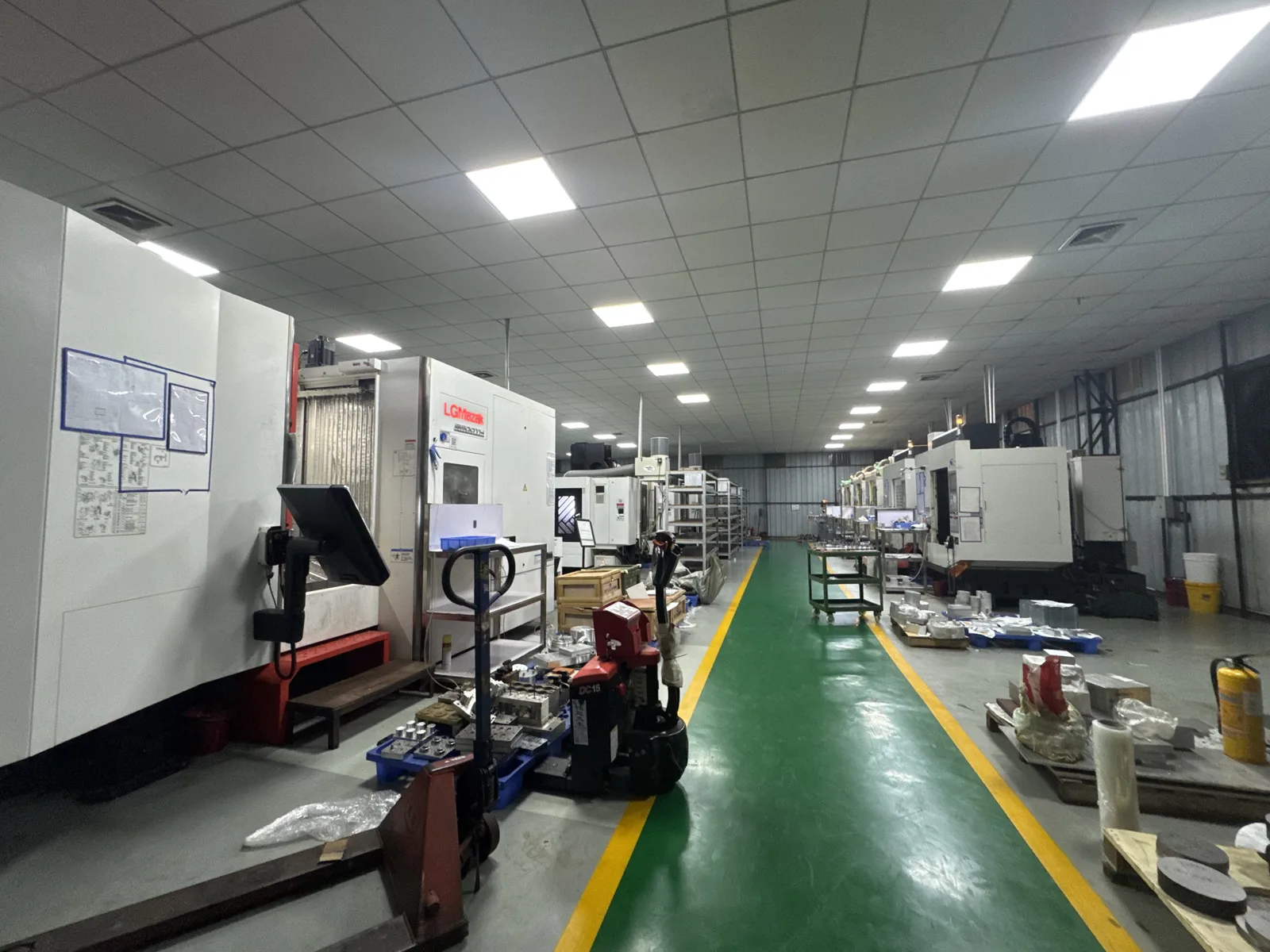
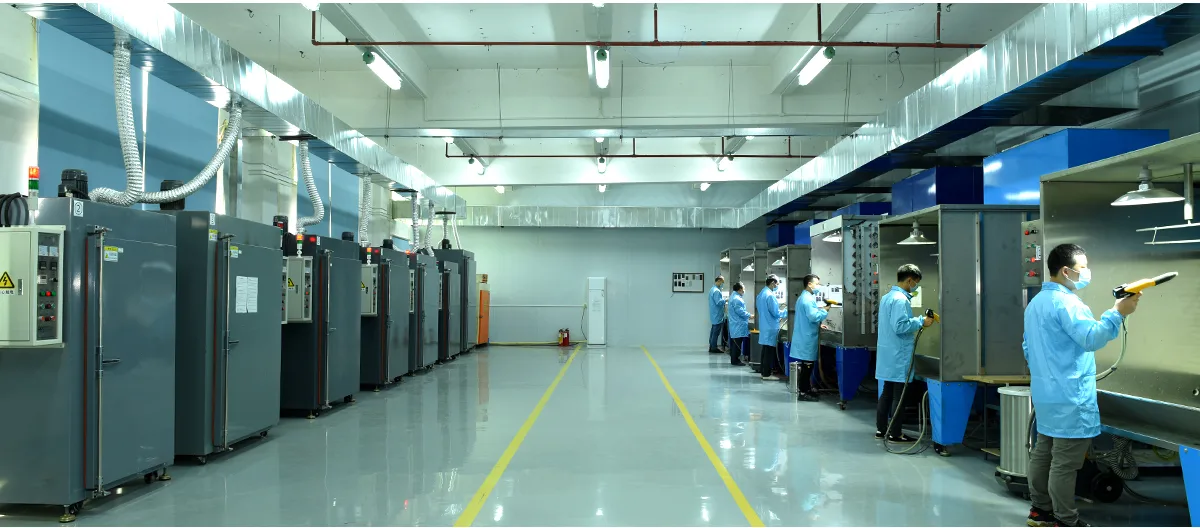
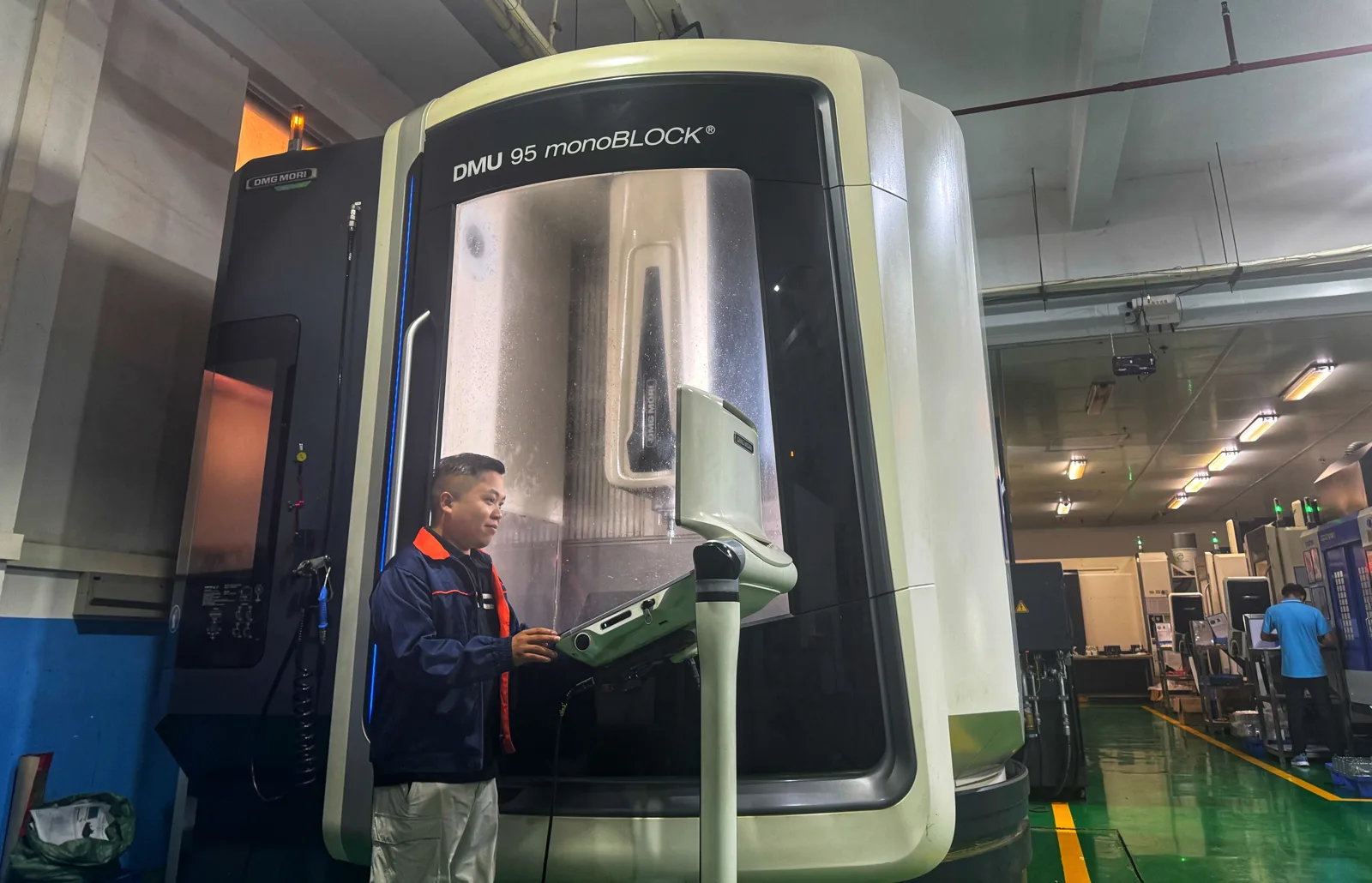
The photos below show BatchMach Precision’s machining workshop, CNC equipment, and day-to-day production environment. Our 3-axis, 4-axis, and 5-axis machining centers and CNC lathes support one-off prototypes, low-volume orders, and repeat production of PVC and CPVC parts.

5-Axis Machining Centers

5-Axis Machining Centers

DMU 95 CNC Machining

DMU 95 CNC Machining

DMG MORI Workshop

DMG MORI Workshop

CNC Machining Workshop

CNC Machining Workshop

CNC Production Line

CNC Production Line

CNC Production Workshop

CNC Production Workshop

Large-Part CNC Workshop

Large-Part CNC Workshop

Large-Part Machining

Large-Part Machining

Powder Coating Workshop

Powder Coating Workshop

Why Choose BatchMach Precision for PVC CNC Machining

Experience with PVC and CPVC

/01

Experience with PVC and CPVC

PVC machining is sensitive to cutting heat, tool condition, and clamping pressure. BatchMach Precision selects tooling, cutting parameters, and workholding according to the material grade, wall thickness, and part geometry to reduce melted burrs, clamping distortion, and damage to thin-wall features.

Machining Capabilities for Complex Geometries

/02

Machining Capabilities for Complex Geometries

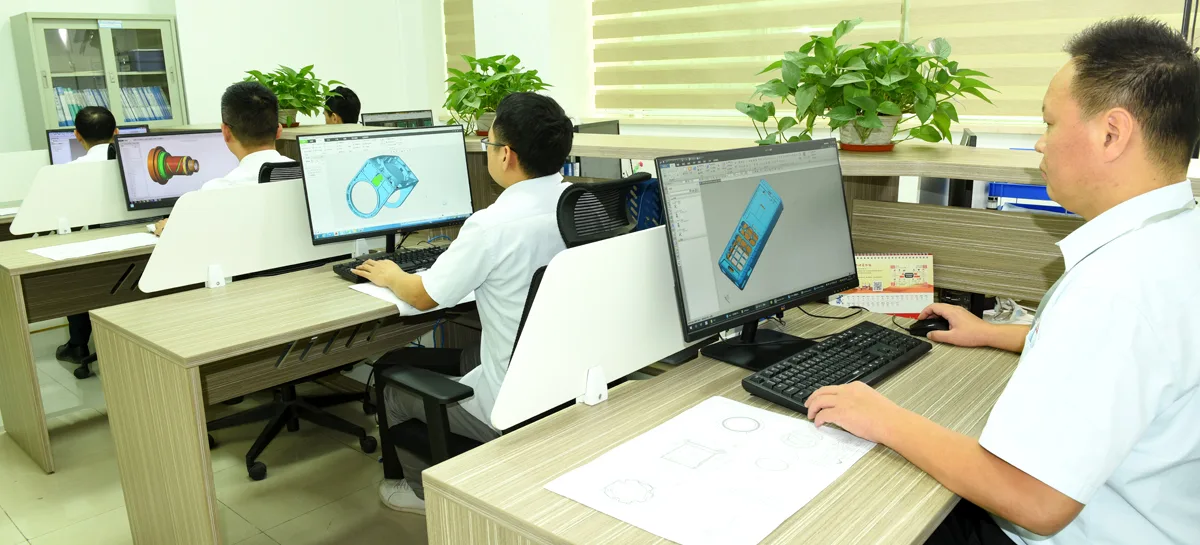
Our 3-axis, 4-axis, and 5-axis machining and CNC turning capabilities support manifolds, valve components, insulators, deep holes, intersecting passages, threads, and sealing features. We select the machining method according to tool access, datum relationships, and the required number of setups.

Flexible Production with No MOQ

/03

Flexible Production with No MOQ

BatchMach Precision supports one-off prototypes, low-volume orders, and repeat production with no minimum order quantity. After confirming the drawing, material, and quantity, we provide factory-direct quotations and adapt workholding and production planning as order volumes increase.

Ready to start your next machining project?

Get a Quote

Quality Control and Assurance for PVC CNC Machining

The dimensions of PVC parts can be affected by material grade, wall thickness, cutting heat, and clamping pressure. BatchMach Precision develops the inspection plan around the approved drawing, with particular attention to mating dimensions, hole positions, threads, sealing features, and thin-wall deformation.

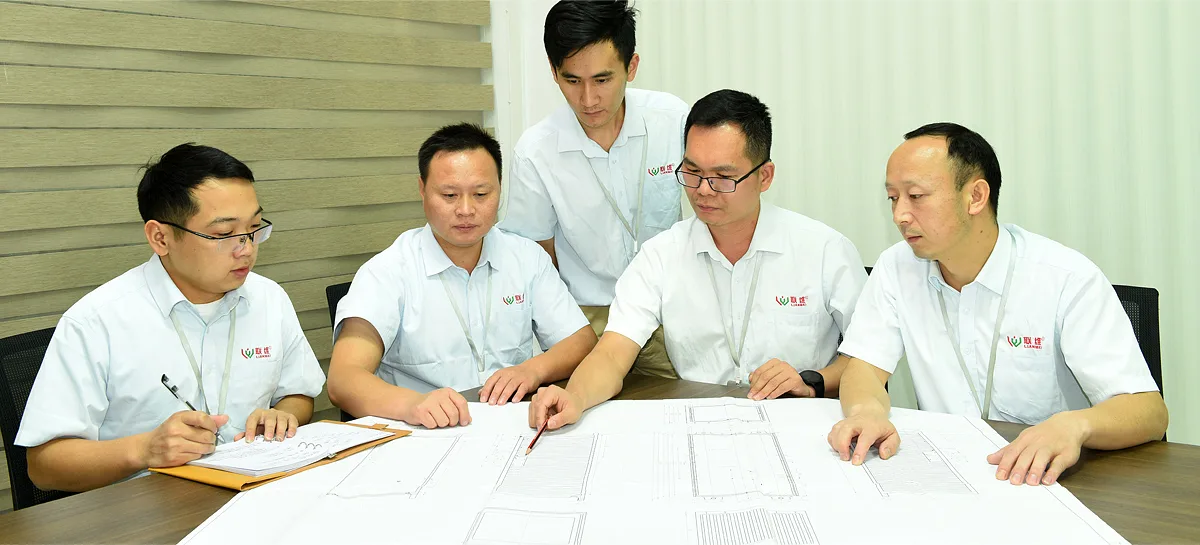
Material and Drawing Verification

Before production, we verify whether the specified material is PVC Type I, PVC Type II, clear PVC, or CPVC. We also confirm the color, stock form, critical tolerances, datums, threads, and surface-finishing requirements. When material documentation is required, the applicable records are confirmed before purchasing and production.

Critical Dimension Inspection

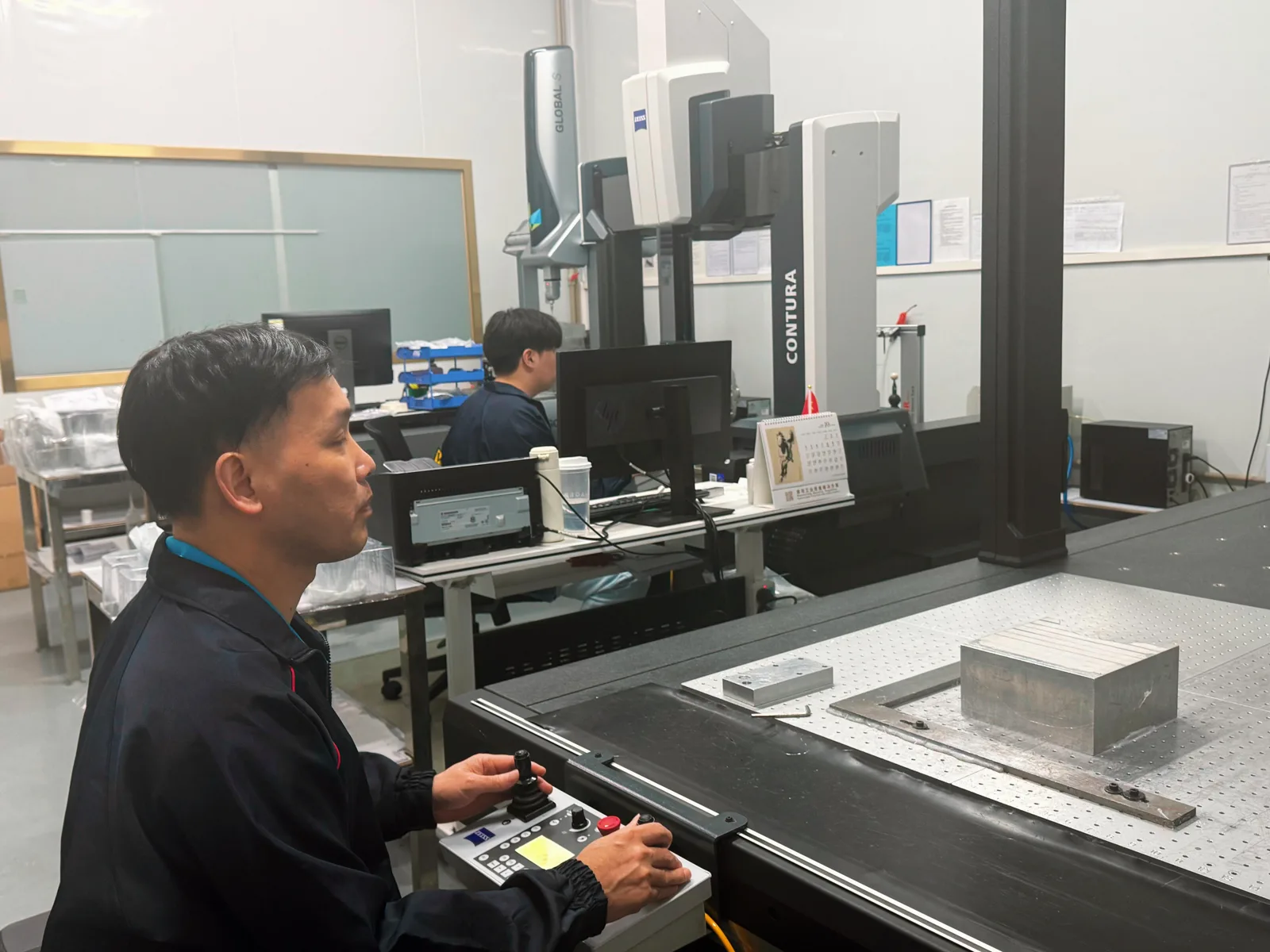
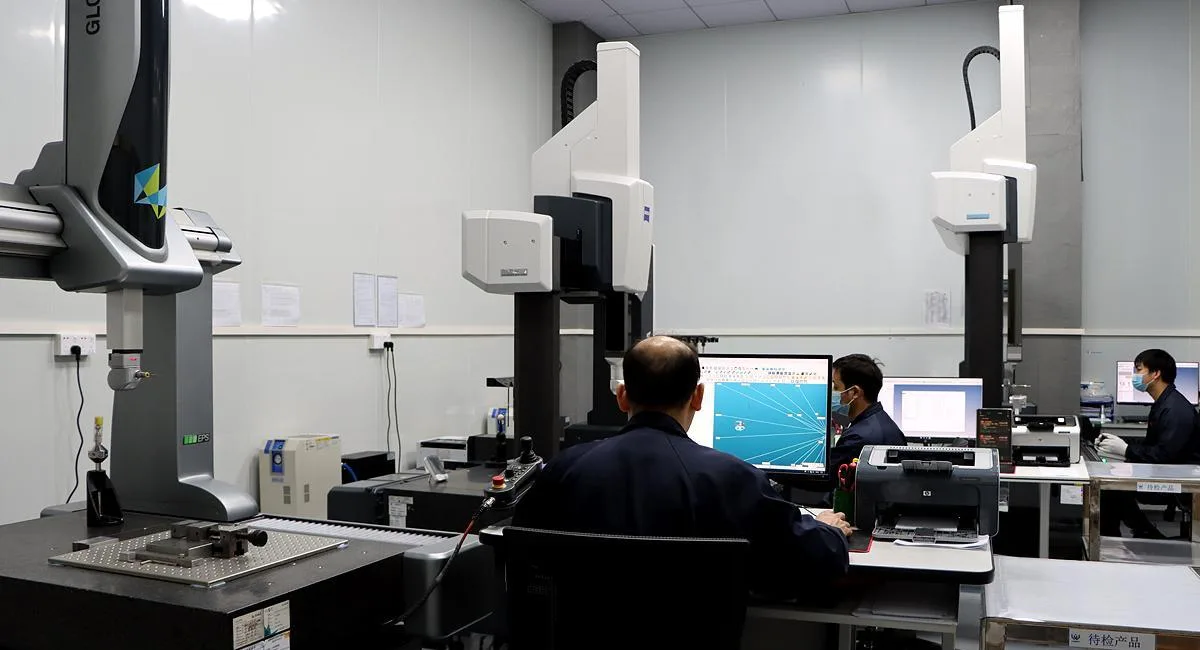
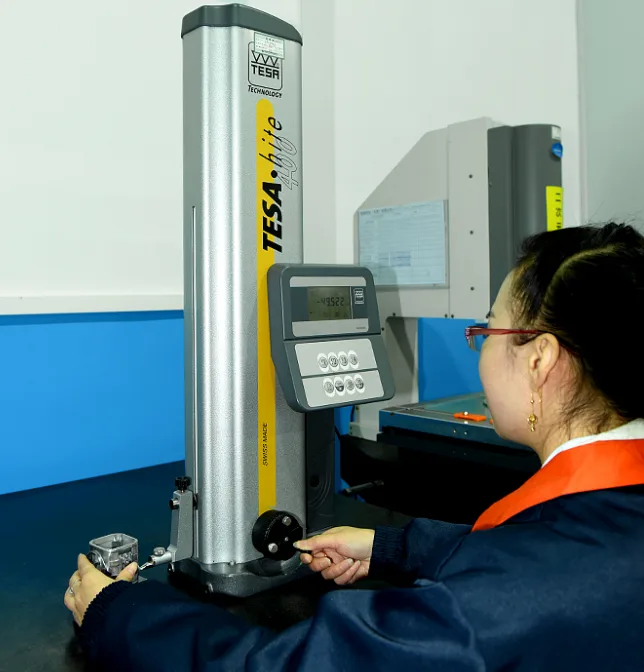
ZEISS CONTURA and Hexagon CMMs, vision measurement systems, TESA height gauges, and Mitutoyo precision measuring tools are used to inspect bores, hole positions, flatness, parallelism, profiles, and mating dimensions. Distortion-sensitive features can be rechecked after the part has been released from the fixture and allowed to stabilize.

Visual Inspection and Final Release

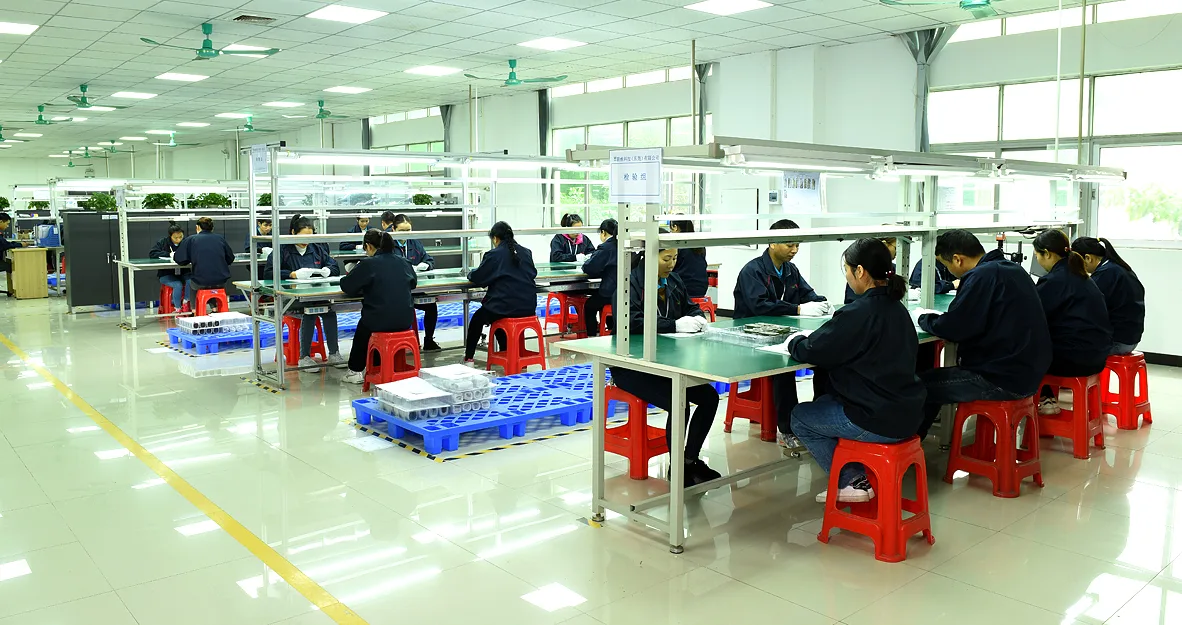
Before shipment, we inspect parts for burrs, chipped edges, scratches, heat-related surface marks, and defects around threads, sealing grooves, and passage openings. Specified viewing areas on clear PVC parts are also checked. Parts are released for shipment only after the quantity, critical dimensions, and required surface conditions have been verified.

Quality Control and Assurance for PVC CNC Machining

PVC CNC Machining FAQ

Yes. Rigid PVC sheet, rod, tube, and block can be CNC milled, turned, drilled, threaded, and 5-axis machined. BatchMach Precision controls tool condition, cutting heat, chip evacuation, and clamping pressure to reduce melted burrs, edge chipping, and deformation.

We machine rigid PVC Type I, impact-modified PVC Type II, clear PVC, and CPVC. These materials differ in rigidity, toughness, transparency, temperature capability, and chemical compatibility. The exact grade is confirmed according to the drawing, operating conditions, and stock availability.

Rigid PVC is generally suitable for cost-conscious components operating at moderate temperatures. CPVC is considered for heated fluids and higher-temperature chemical environments. Selection should account for the chemical, concentration, temperature, pressure, and exposure time—not simply the material name.

BatchMach Precision can hold critical PVC part tolerances down to ±0.005 mm.

Yes. We machine internal and external threads, precision bores, O-ring grooves, sealing surfaces, intersecting holes, and internal passages. The RFQ should identify the thread standard, fit requirements, seal specifications, and critical surfaces.

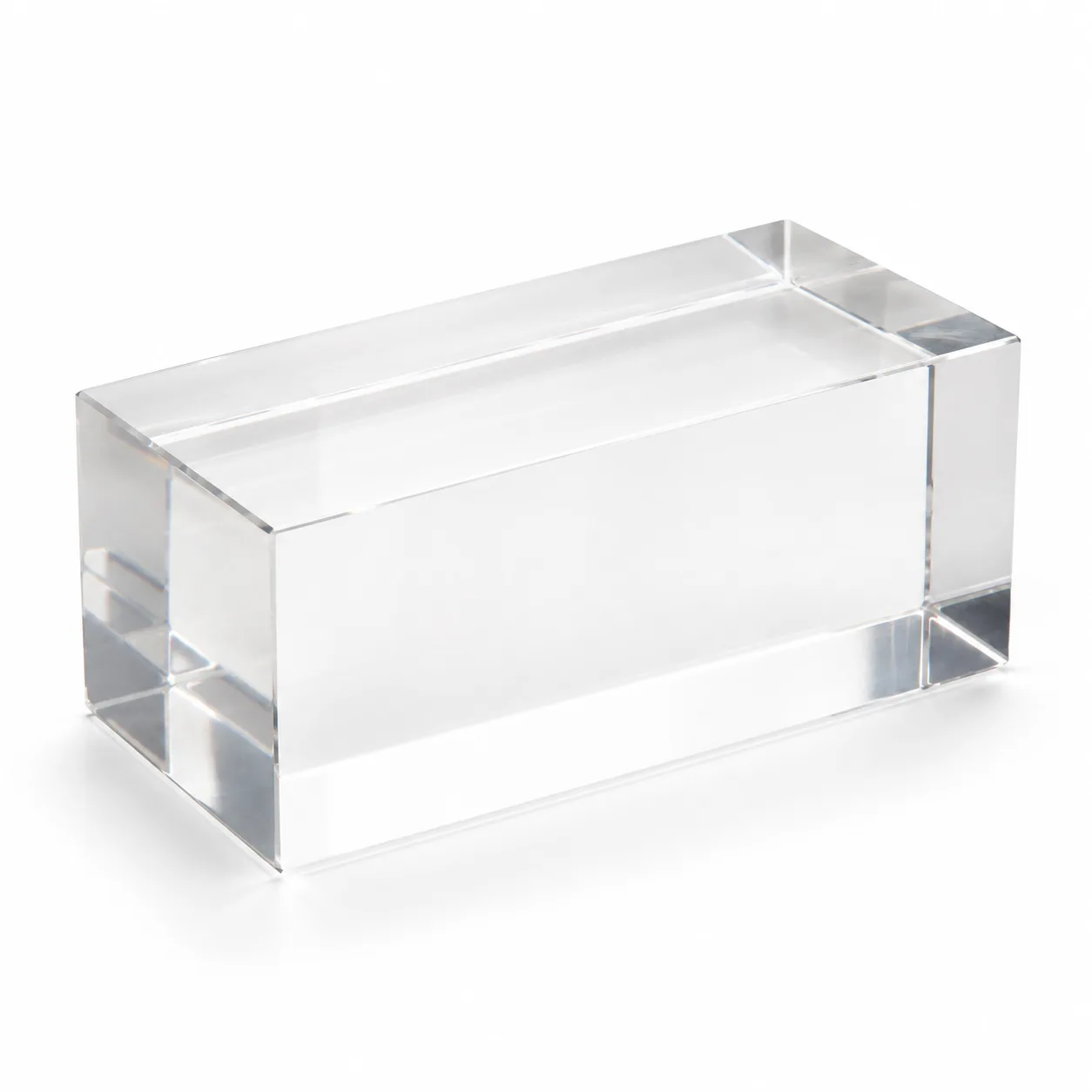
Yes. BatchMach Precision machines clear PVC inspection windows, guards, covers, and visible fluid-handling components. Selected surfaces can also be sanded or mechanically polished. Required viewing areas and appearance standards should be identified on the drawing.

We use sharp tools, controlled cutting parameters, effective chip evacuation, and low-stress workholding selected for the PVC grade and part geometry. Thin-wall parts or components requiring substantial material removal may be machined in stages to reduce heat buildup and movement after unclamping.

Available options include as-machined, deburring, manual sanding, mechanical polishing, sand blasting, painting, and printing. The finish is selected according to appearance, transparency, dimensional requirements, and operating conditions.

Yes. BatchMach Precision has no minimum order quantity and supports one-off prototypes, low-volume batches, and repeat production. Simple projects can be delivered in as fast as one day after the drawing, material, and inspection requirements are confirmed.

Explore More CNC Machining Materials

In addition to PVC, BatchMach Precision machines nylon, POM (Delrin), PEEK, acrylic (PMMA), polycarbonate (PC), polyethylene (PE), and polystyrene (PS). Explore our other plastic CNC machining services to compare material options for your part’s strength, wear resistance, operating temperature, and appearance requirements.

Free first-order sample for new customers

Send your drawings today — get a free process evaluation, quotation within 24 hours, and flexible quarterly settlement for long-term partners.

Upload Drawing & Get Quote