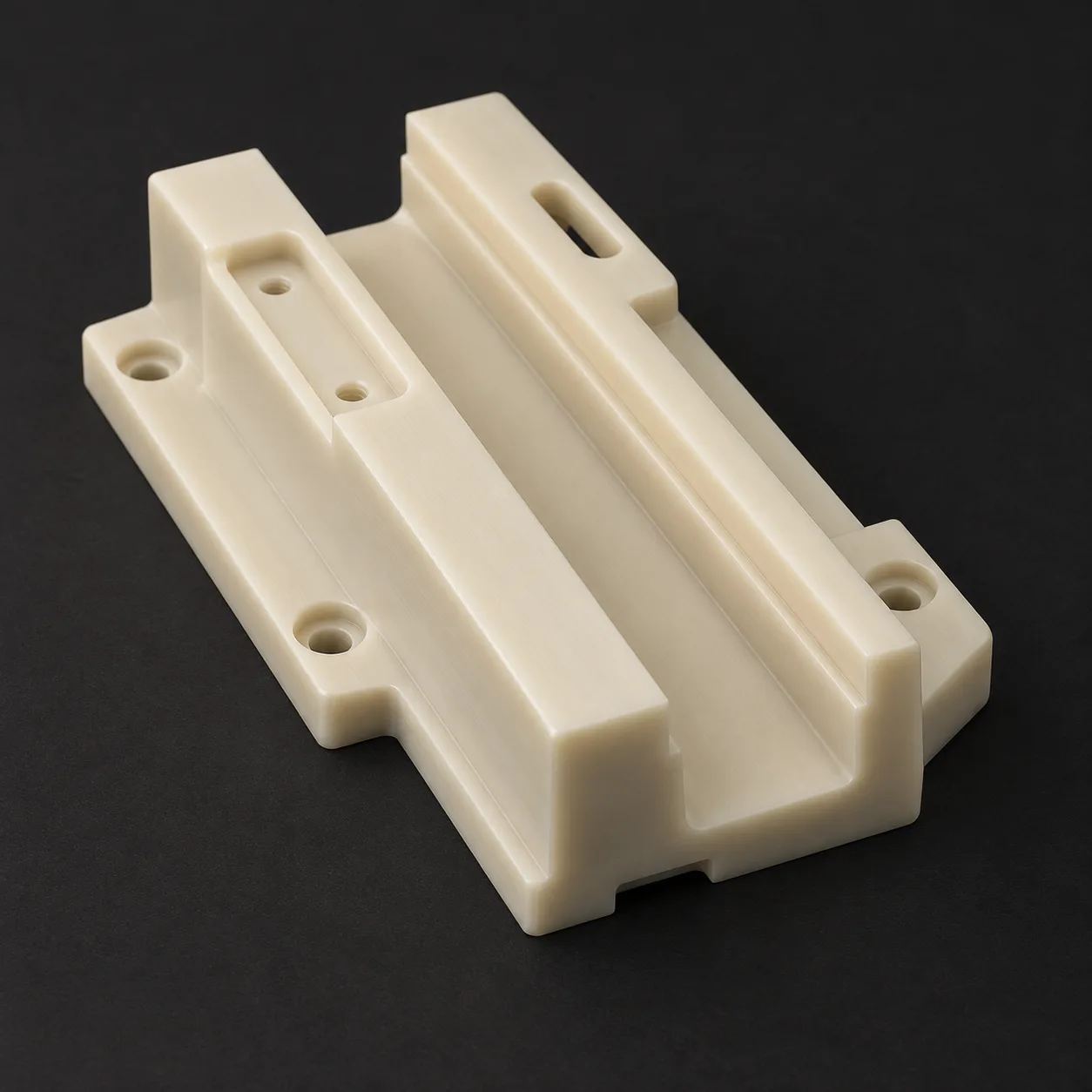
Nylon CNC Milling
For nylon parts with pockets, slots, holes, flat surfaces, and multi-sided features. BatchMach Precision controls cutting heat, tool sharpness, and clamping pressure to reduce burrs, surface marks, and dimensional movement.
Engineering Plastics
BatchMach Precision provides custom nylon CNC machining for PA6, PA66, and glass-filled nylon parts. Using CNC milling, turning, mill-turn, and multi-axis machining, we control cutting heat, clamping stress, burrs, and moisture-related dimensional changes to produce reliable prototypes and low-volume components.
Upload Your CAD Files for a Quote
Drop your CAD file here or click to browseSupported: STEP, STP, IGES, SLDPRT, DXF, DWG, PDFYour files are secure and confidential · Max file size: 100 MB
19+
Years of Experience
250+
Machines & Testing Equipment
11,000 m²
Manufacturing Area
200+
Skilled Staff
ISO
9001 / 13485 / AS9100D
From prototypes to repeat production, BatchMach Precision brings together two ISO-certified CNC factories, practical machining expertise, and dimensional inspection to deliver custom parts built to your drawings.







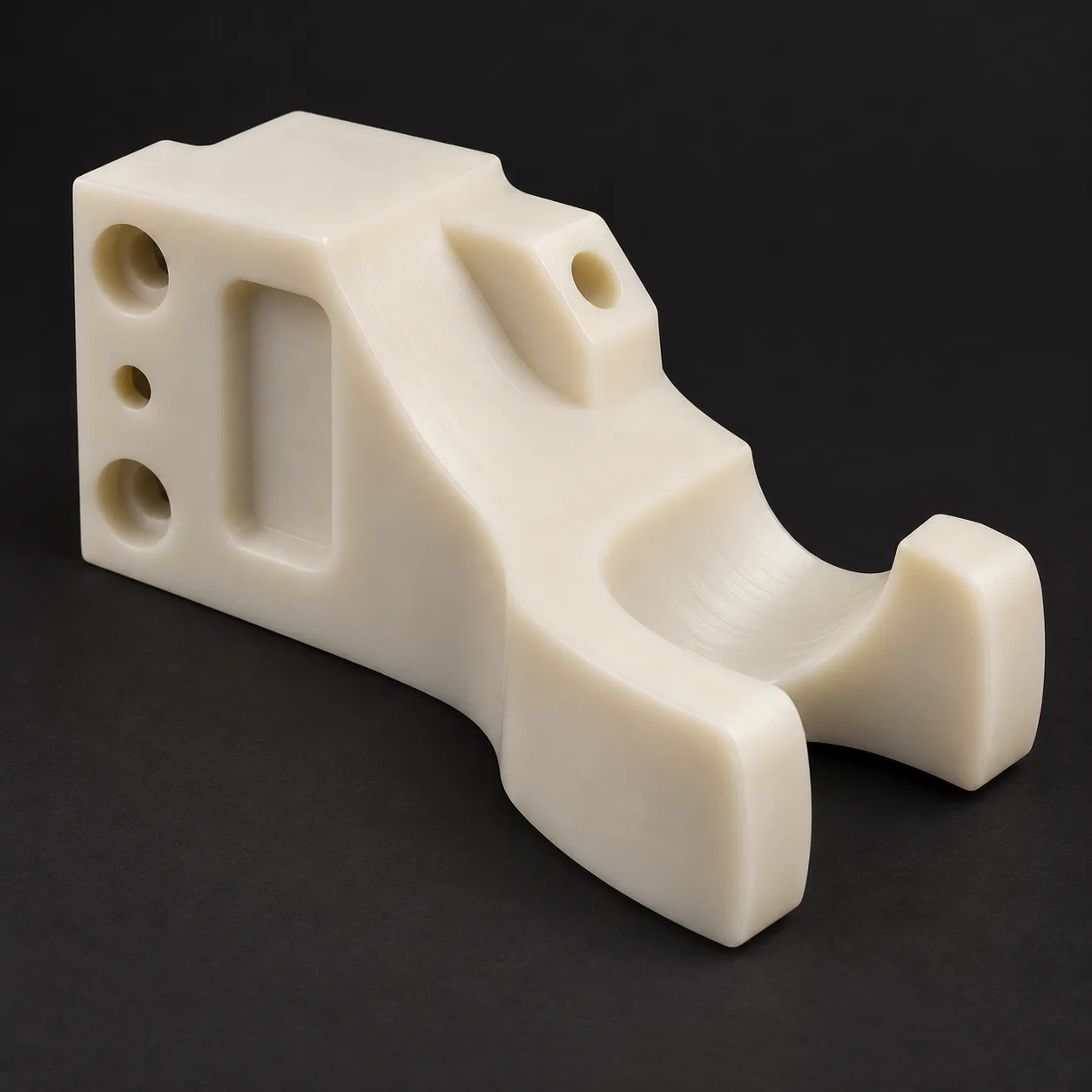
For nylon parts with pockets, slots, holes, flat surfaces, and multi-sided features. BatchMach Precision controls cutting heat, tool sharpness, and clamping pressure to reduce burrs, surface marks, and dimensional movement.
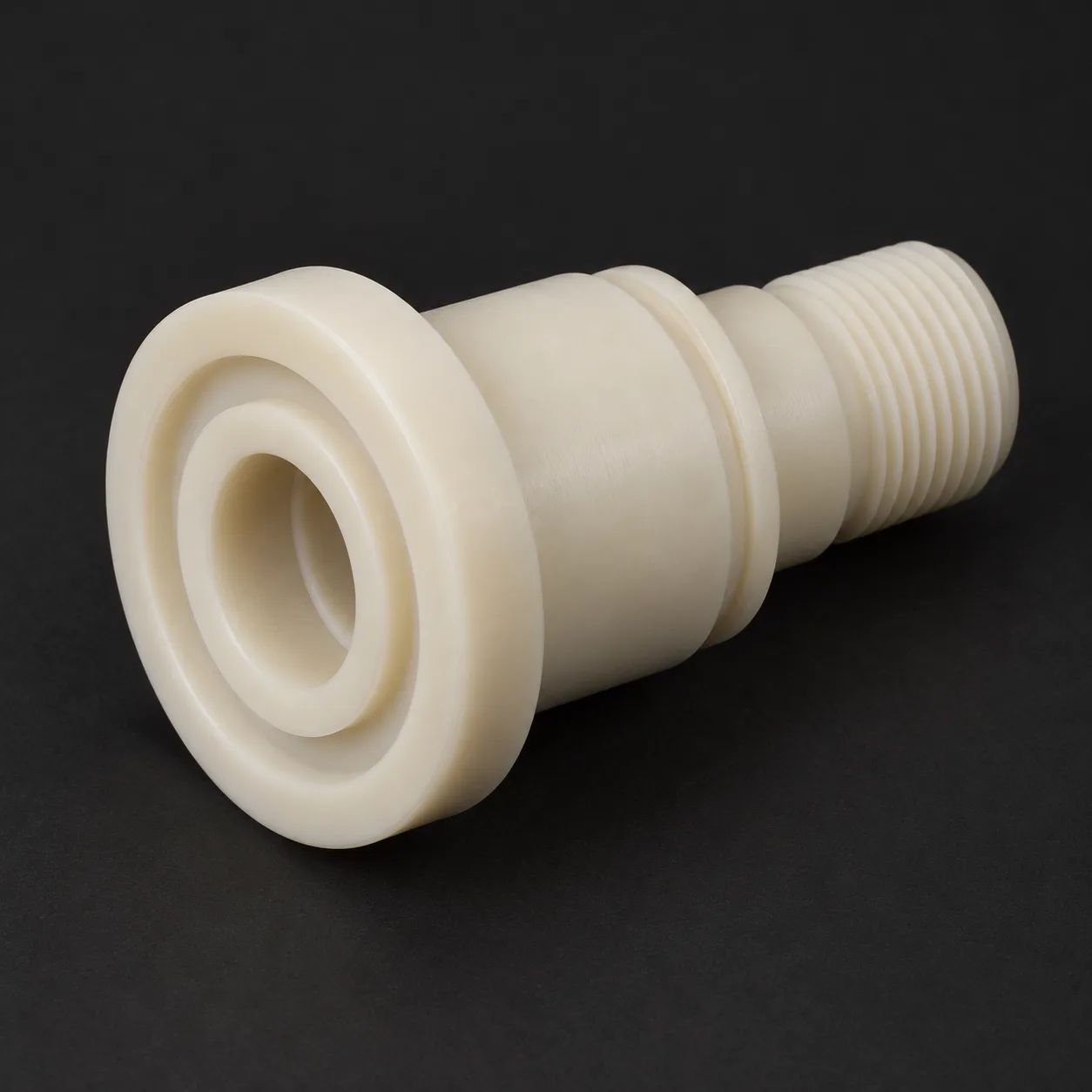
For round nylon parts requiring controlled diameters, bores, grooves, threads, and concentric features. Stable workholding and post-unclamping inspection help maintain dimensional consistency.
Five-axis machining is suitable for custom nylon parts with angled features, compound surfaces, or machining requirements on multiple sides. Reducing repeated setups helps control handling and clamping deformation while maintaining positional relationships between critical features.
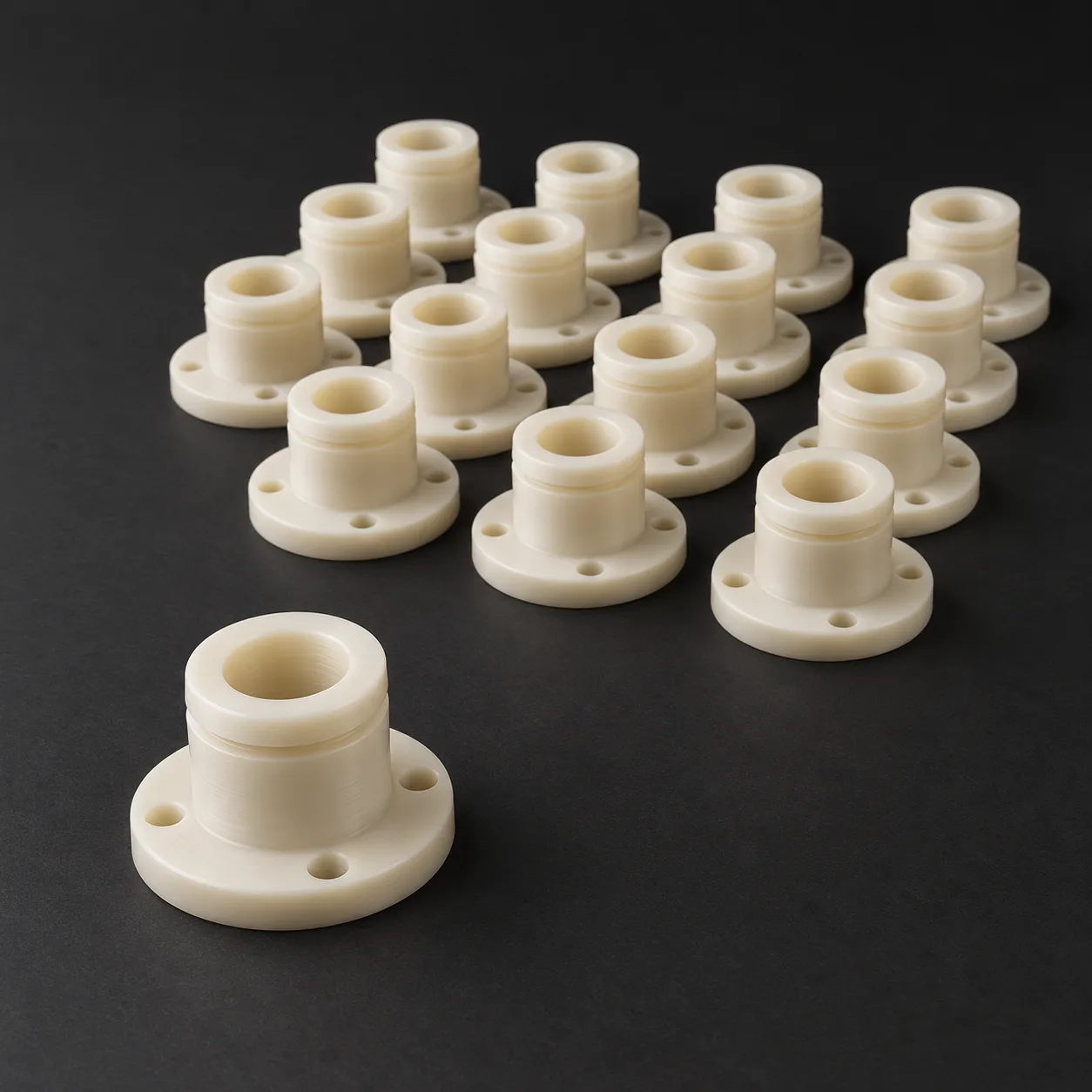
BatchMach Precision produces nylon machined parts for prototypes, low-volume orders, and repeat production runs without mold tooling. Defined machining parameters, controlled fixturing, and in-process inspection help maintain dimensional consistency as quantities increase.
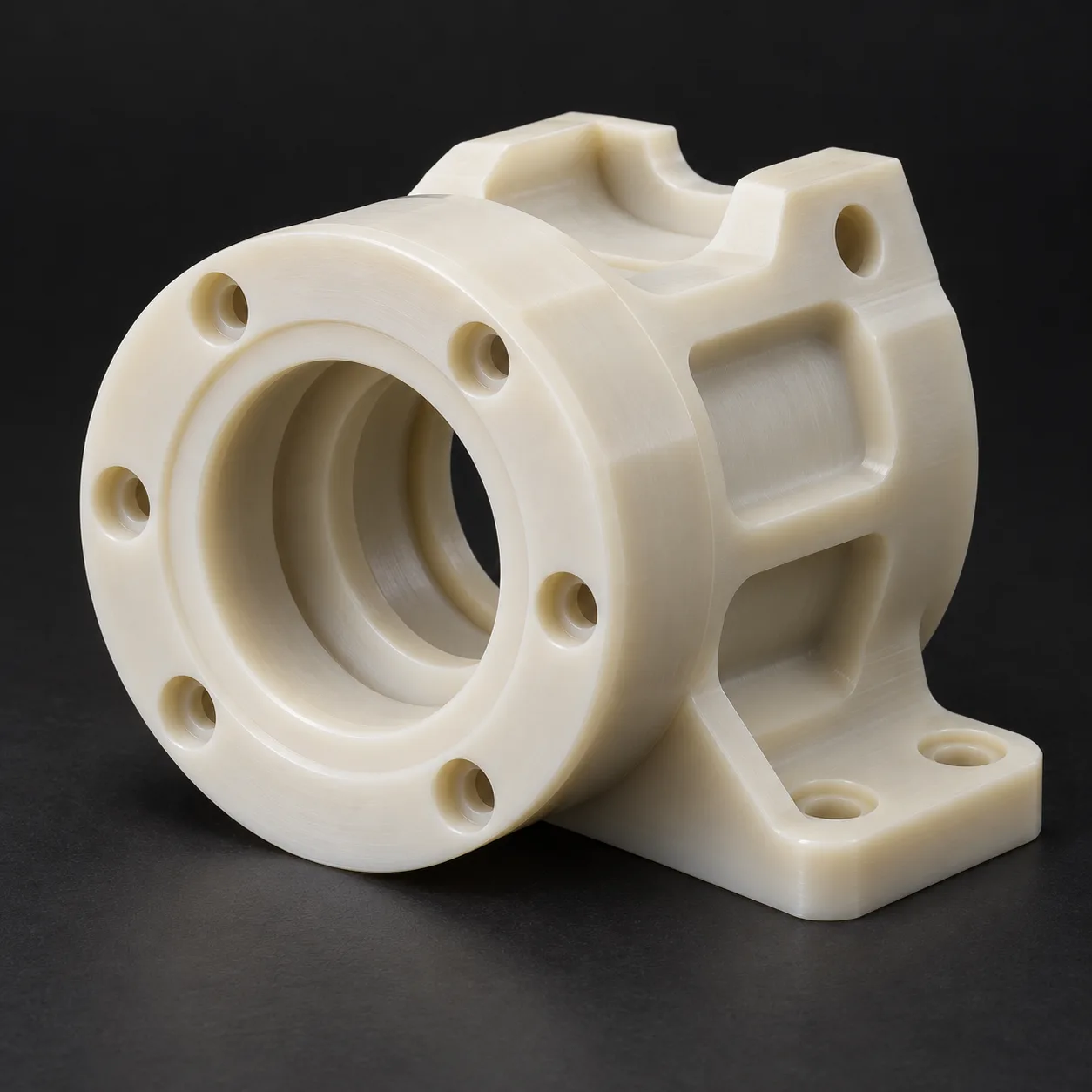
Nylon, also known as polyamide or PA, combines toughness, wear resistance, low friction, and relatively low weight. CNC-machined nylon is commonly used for functional components that require repeated movement, impact resistance, electrical insulation, or reduced contact with metal parts.
Nylon is available in several grades, including PA6, PA66, and glass-filled nylon. Each grade behaves differently during machining and service. Moisture absorption, cutting heat, clamping pressure, wall thickness, and material removal can all affect the final dimensions. BatchMach Precision reviews these factors before selecting the machining sequence, workholding method, and inspection plan.
| Item | BatchMach Precision Capability |
|---|---|
| Lead Time | As fast as 5 days |
| Minimum Wall Thickness | Down to 0.8 mm |
| Machining Tolerance | Critical dimensional tolerances down to ±0.005 mm |
| Maximum Part Size | Up to Ø1040 × 590 mm |
Nylon properties vary by polymer type, manufacturing method, reinforcement, and moisture condition. The values below provide a practical comparison of commonly machined nylon stock materials.
A practical option when toughness, wear resistance, and cost are the main considerations.
79 MPa
Tensile Strength
100 MPa
Flexural Strength
3,300 MPa
Tensile Modulus
24 / 41 MPa
Compressive Stress at 1% / 2% Strain
1.14 g/cm³
Density
The appropriate finish depends on the nylon grade, dimensional requirements, appearance standard, and operating environment. BatchMach Precision reviews critical fits, threads, sealing areas, and cosmetic surfaces before applying or coordinating secondary finishing.
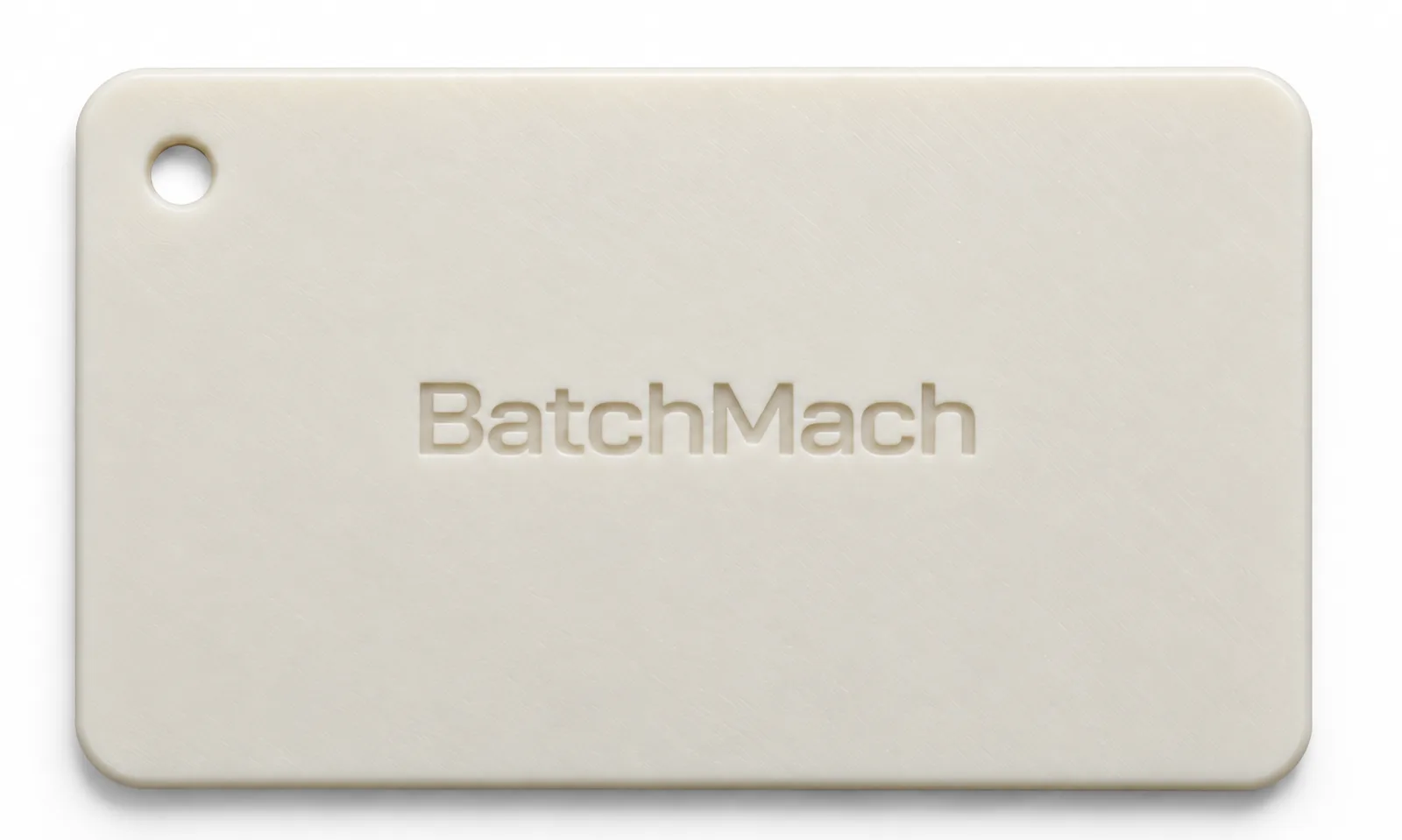
The standard option for nylon CNC machining. It preserves critical dimensions and avoids additional material removal. Controlled cutting parameters and sharp tools help reduce burrs, heat marks, and visible tool paths.
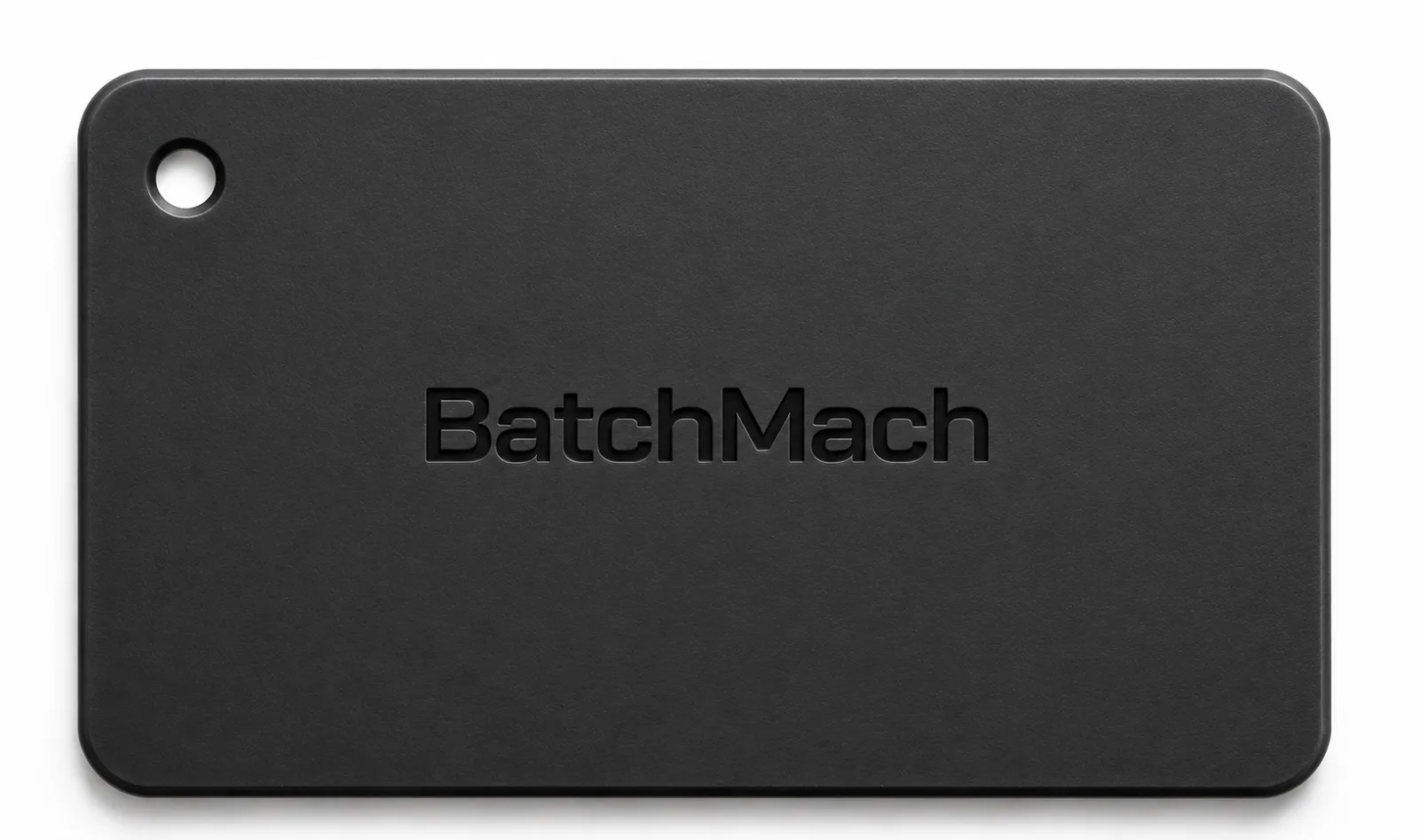
Manual or controlled mechanical deburring removes loose burrs and sharp edges after milling or turning. Critical corners, threads, holes, and mating features are protected to avoid excessive edge rounding or dimensional change.
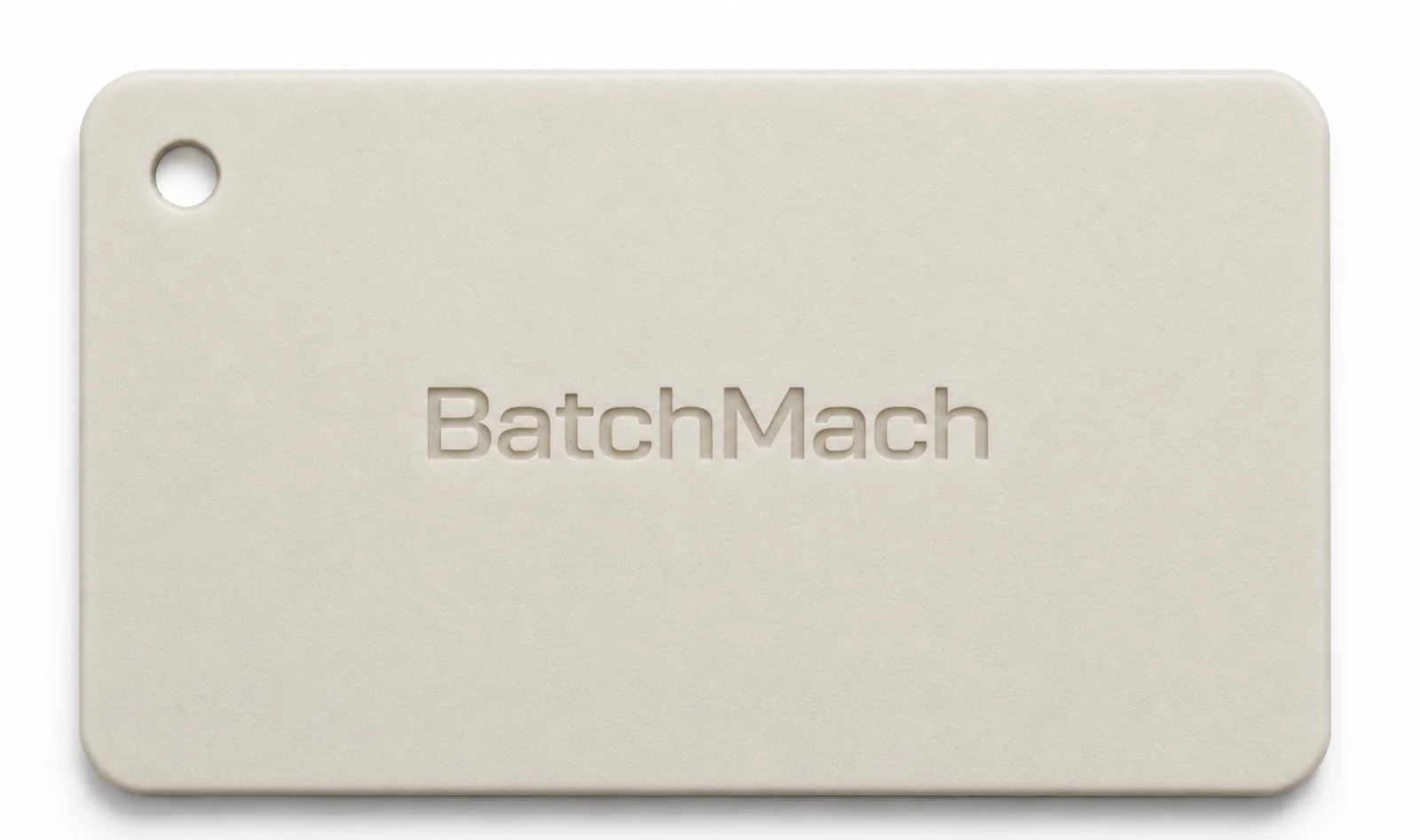
Bead blasting creates a more uniform matte surface and can reduce the visibility of machining marks. Media size, pressure, and exposure time must be controlled, while threads, fits, and sealing surfaces should be masked.
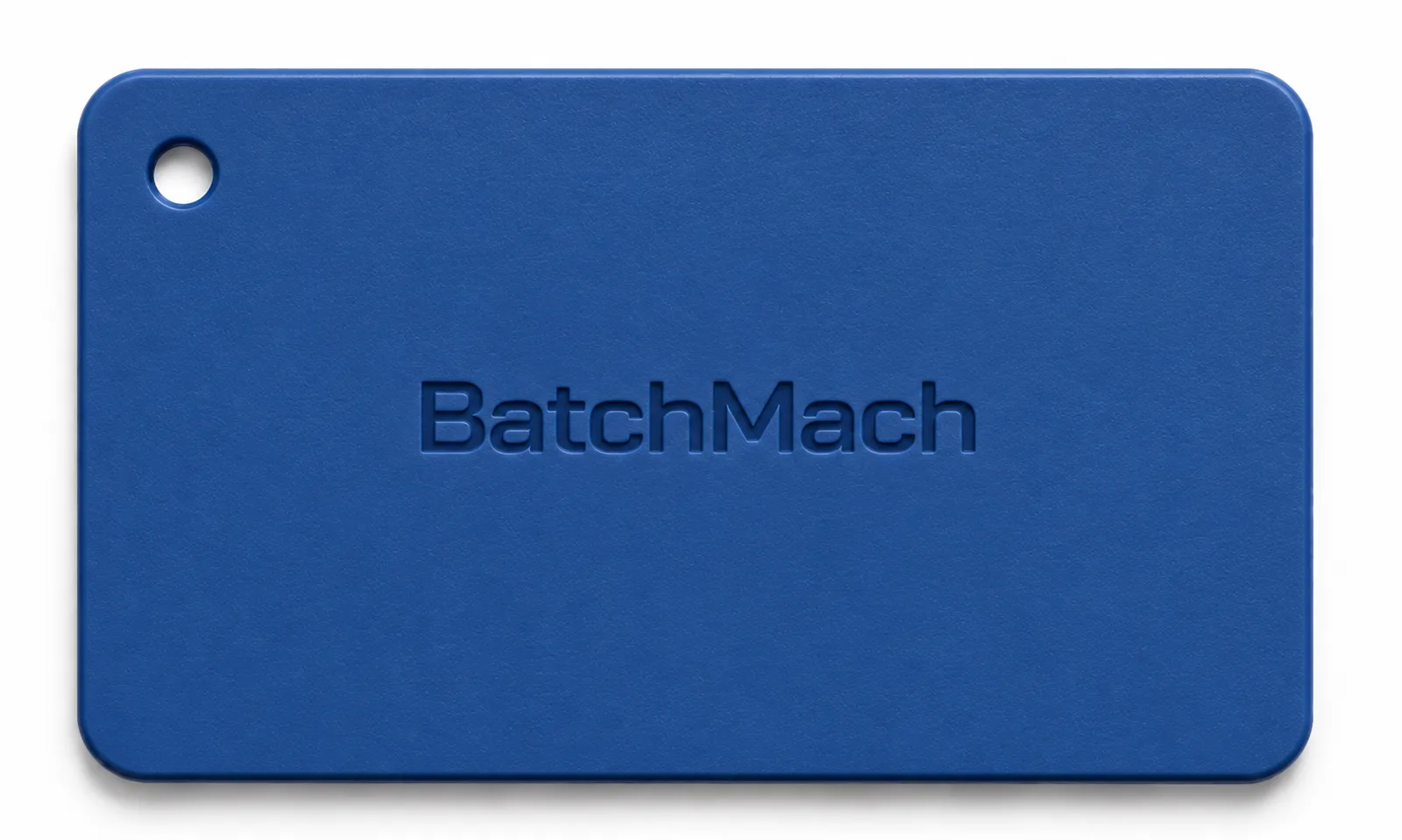
Painting can add color, identification, or surface protection to nylon parts. The surface may require cleaning, light abrasion, a compatible primer, or plasma treatment to improve long-term adhesion. The coating system should be validated against the nylon grade, moisture condition, and service environment.
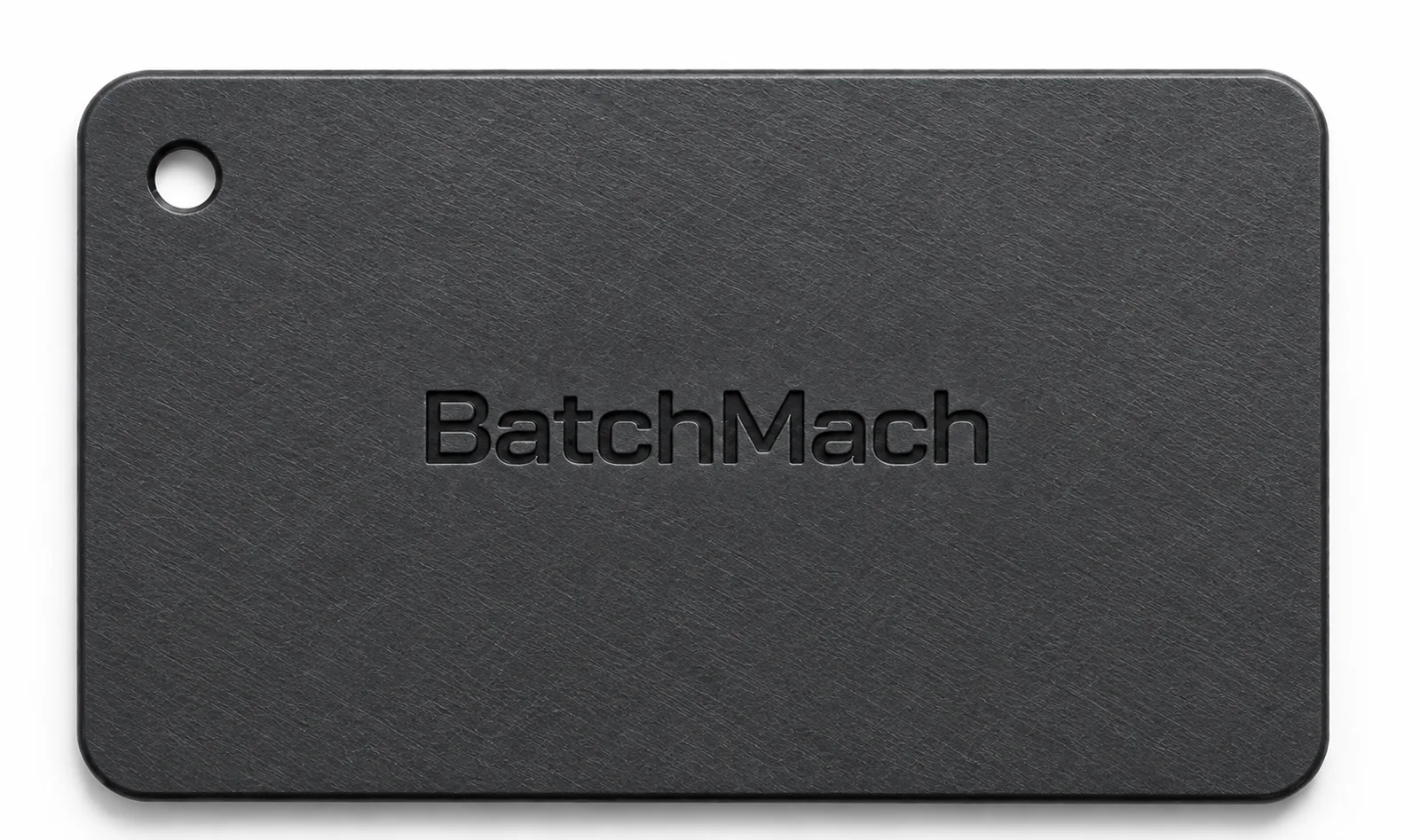
Nylon parts that will be bonded may require cleaning, abrasion, primer, plasma treatment, or a nylon-specific adhesive. BatchMach Precision can identify bonding areas on the drawing and keep them free from machining residue and handling contamination.
Nylon and POM are both machinable engineering plastics with good wear performance and low friction. The main difference is how they respond to moisture, load, impact, and dimensional requirements. BatchMach Precision reviews the operating environment and assembly function before recommending either material.
| Selection Factor | Nylon (PA) | POM / Acetal |
|---|---|---|
| Toughness and Impact | Generally better suited to shock, vibration, and demanding mechanical contact | Good resilience, but usually selected for dimensional stability rather than maximum toughness |
| Moisture Absorption | Absorbs moisture, which can change dimensions and mechanical properties | Low moisture absorption and more stable in humid or wet environments |
| Dimensional Stability | Requires closer control of material condition, machining stress, and inspection environment | Better suited to close fits, repeatable dimensions, and precision mechanical features |
| Wear and Sliding | Often preferred for dry wear, abrasion, and higher mechanical loads | Provides low friction and consistent wear behavior, particularly where moisture stability matters |
| CNC Machining | Cutting heat, burrs, clamping pressure, and material movement require additional control | Produces cleaner chips and is generally easier to machine to stable dimensions |
| Reinforced Grades | Glass-filled grades provide greater stiffness and reduced deformation but increase tool wear | Available in homopolymer, copolymer, bearing, ESD, and other modified grades |
Select nylon when the part requires toughness, impact resistance, abrasion resistance, vibration damping, or reliable performance under repeated mechanical contact. PA6, PA66, and glass-filled nylon provide different balances of strength, stiffness, wear, and dimensional stability.
Select POM when the part requires tight fits, low moisture absorption, clean machined features, low friction, or stable dimensions in changing humidity. POM is often the better starting point for precision components with critical clearances or repeatable assembly requirements.
Send us your 3D model, 2D drawing, operating load, temperature, humidity, mating material, and inspection requirements. BatchMach Precision can compare nylon and POM based on the actual part instead of selecting a material from general property claims.
Core challenges and our solution for a batch of 120 glass-filled nylon brackets.
The 280 × 225 × 185 mm bracket contains multiple ribs and limited continuous clamping surfaces. Molding warpage and fixture pressure could cause the base to spring back beyond the 0.08 mm flatness requirement after unclamping.
The Ø80 H7 bore has a total tolerance of 0.030 mm. Its mounting-hole pattern must maintain a Ø0.10 mm positional tolerance, while the annular face must remain parallel to datum A within 0.05 mm. Setup error or part deformation could prevent correct motor and bearing alignment.
The glass fibers in PA66 GF30 wear cutting edges and can gradually change bore size, edge quality, and surface finish. Tool life had to be controlled so the entire batch met the same requirements.
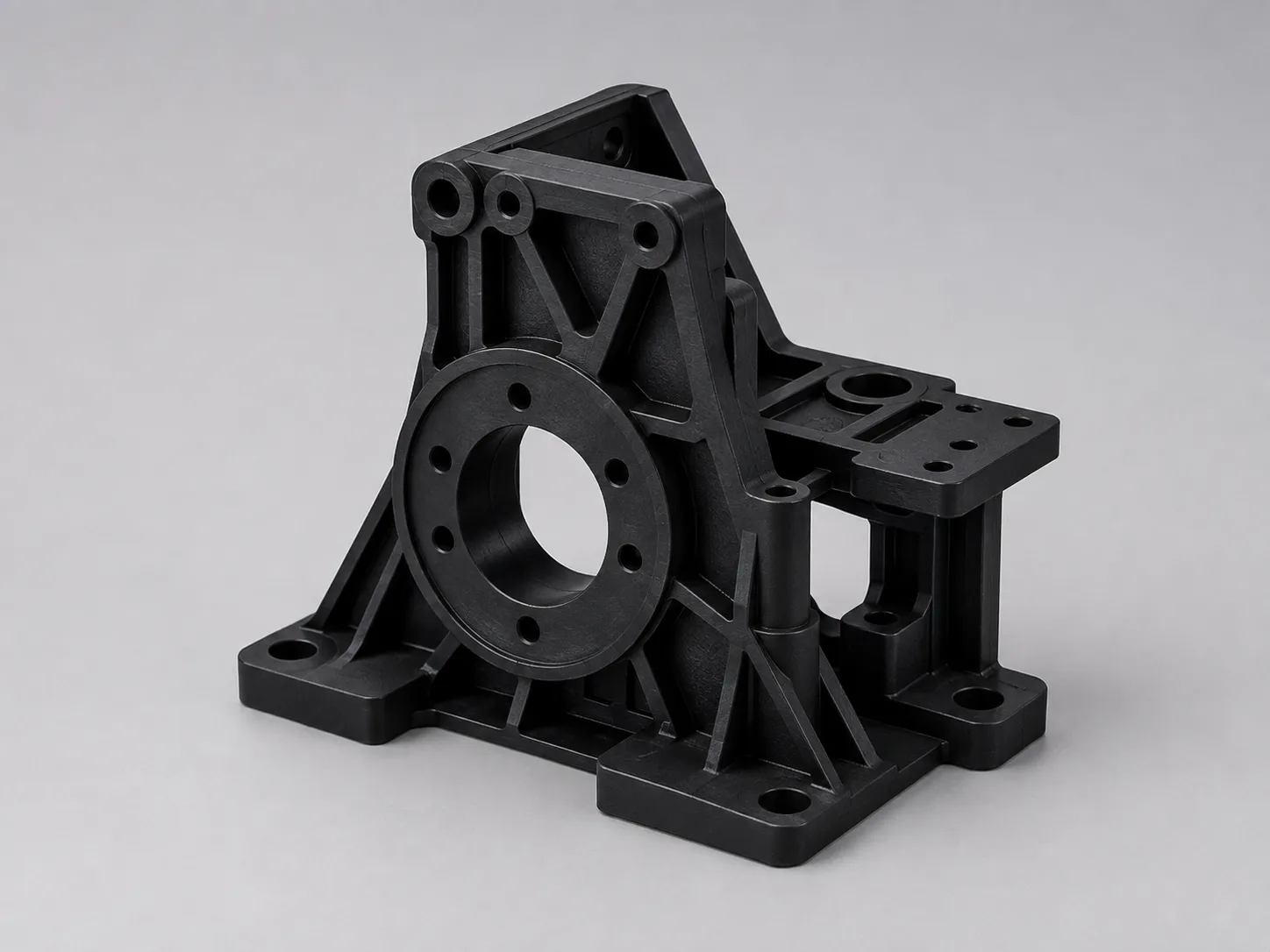
BatchMach Precision machined the base to establish datum A, then created datums B and C from the side and locating features. A dedicated fixture supported the rigid body areas rather than the ribs. After unclamping, all 120 brackets met the 0.08 mm base-flatness requirement without secondary correction.
The central bore was rough-machined and then finish-bored after the main material removal. The bore, annular face, and mounting-hole pattern were machined from one controlled datum system. Final results met Ø80 H7, Ø0.10 mm positional tolerance, and 0.05 mm parallelism, allowing direct assembly without hole rework or manual fitting.
BatchMach Precision used wear-resistant tooling with defined replacement limits. Every central bore was inspected, the first three parts received full dimensional inspection, and one part from every ten was checked using a ZEISS or Hexagon CMM. All 120 PA66 GF30 brackets were inspected and delivered within 15 working days, ready to move directly into the customer’s assembly process.
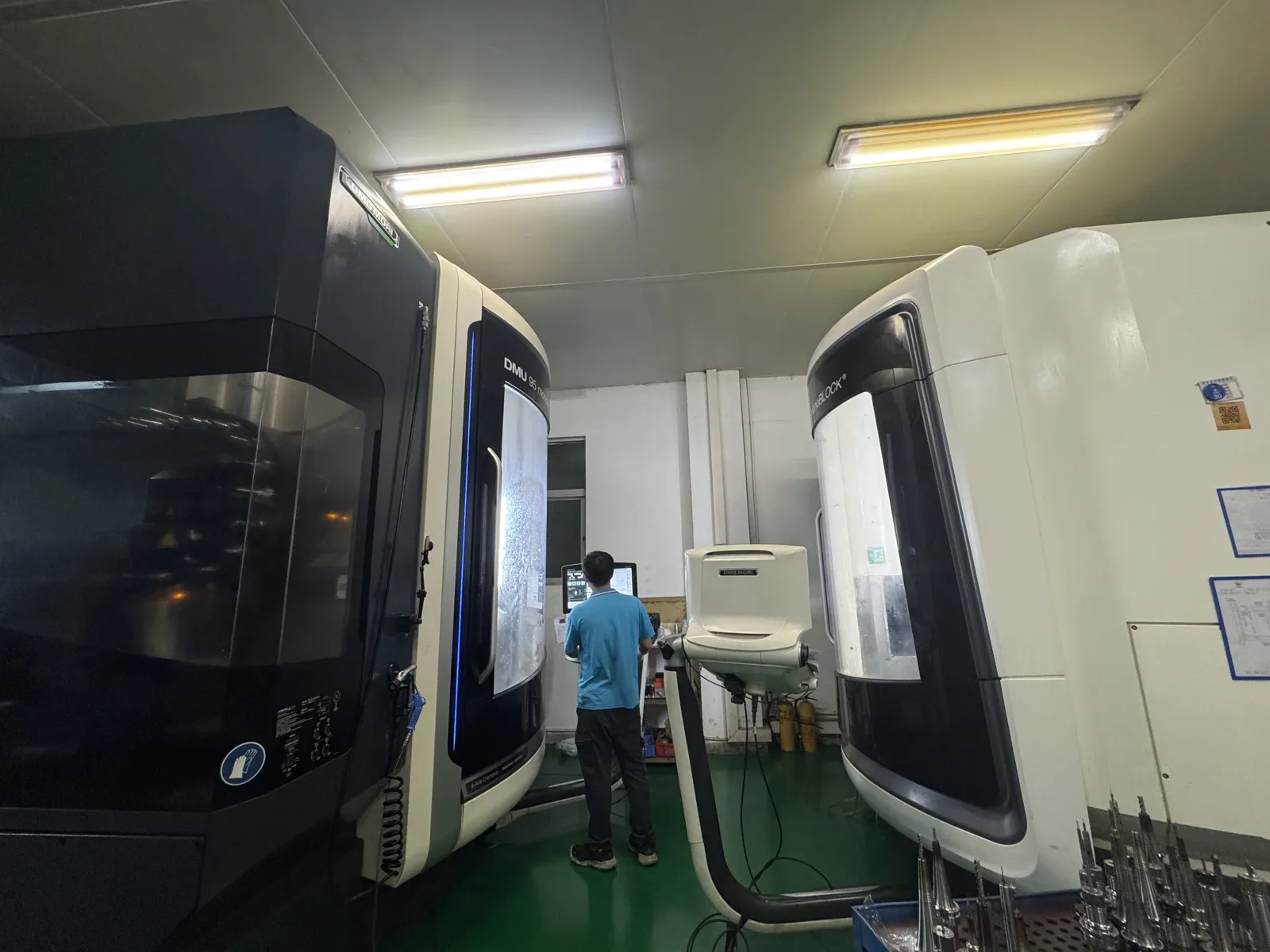
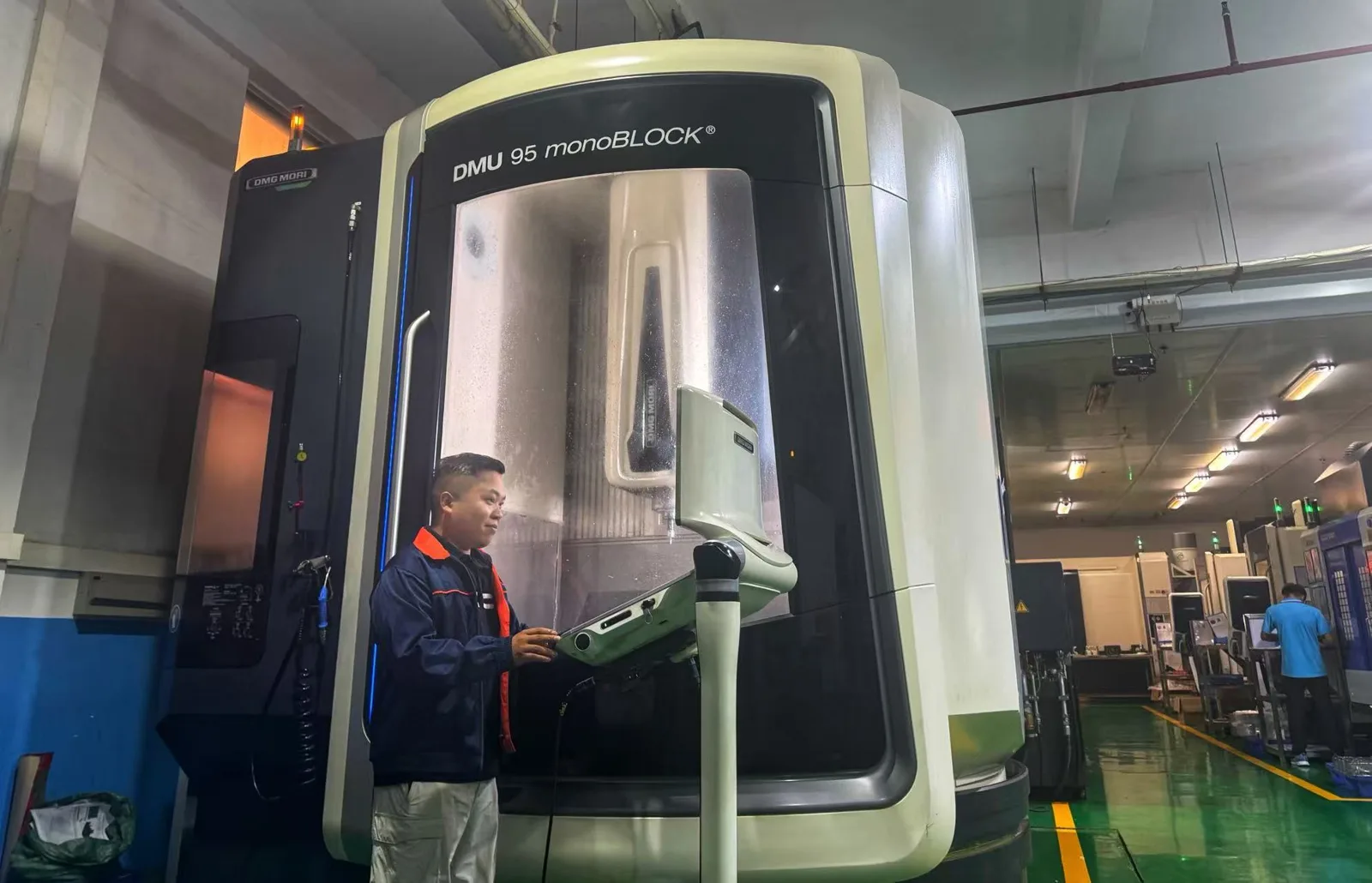
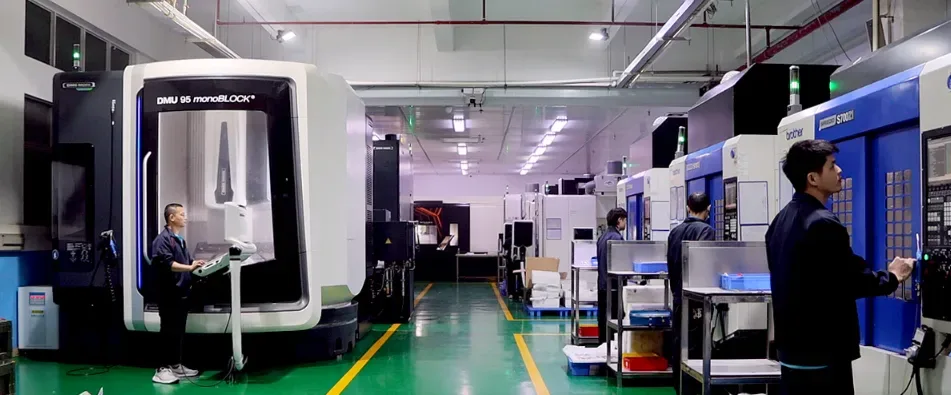
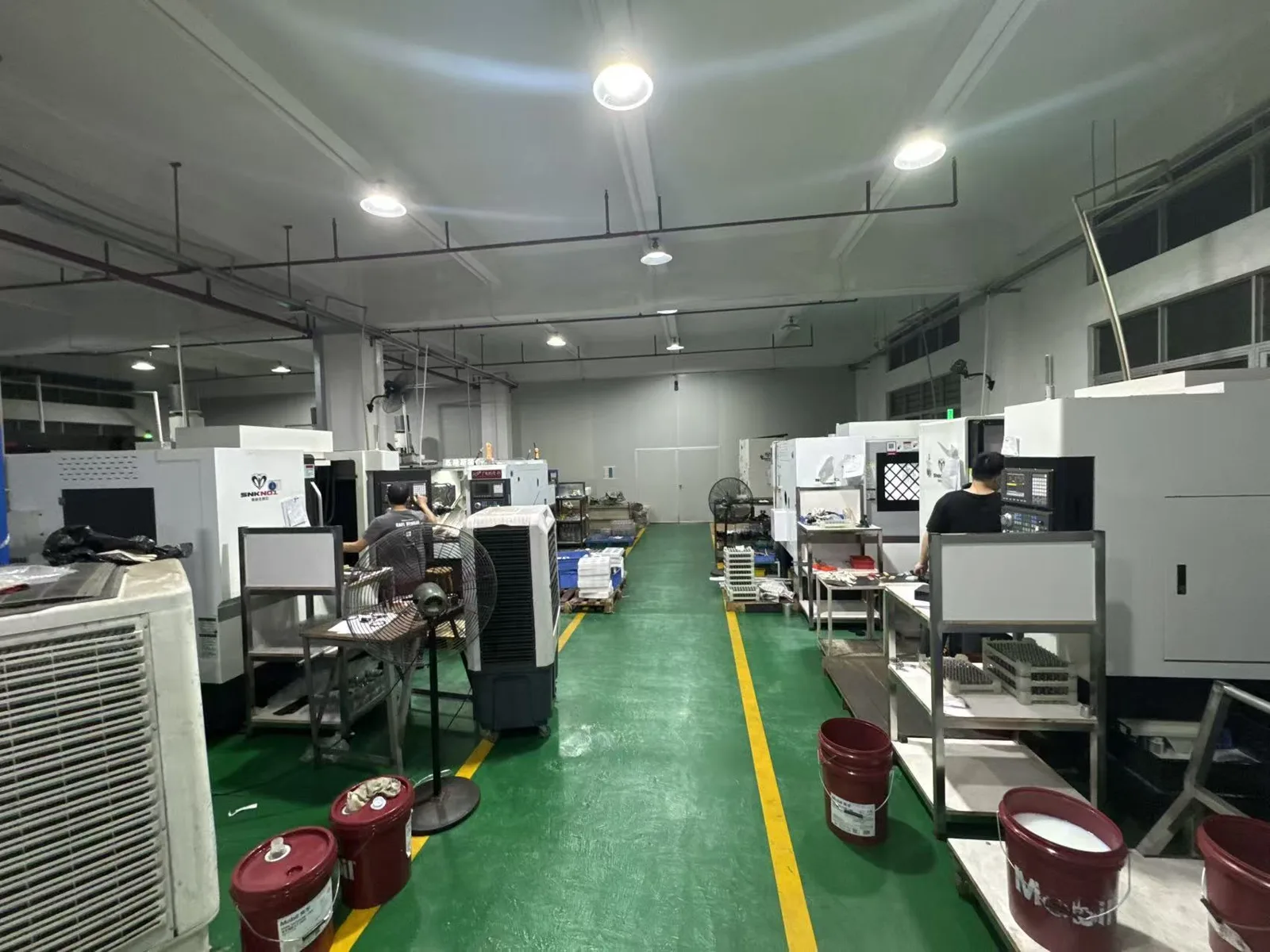
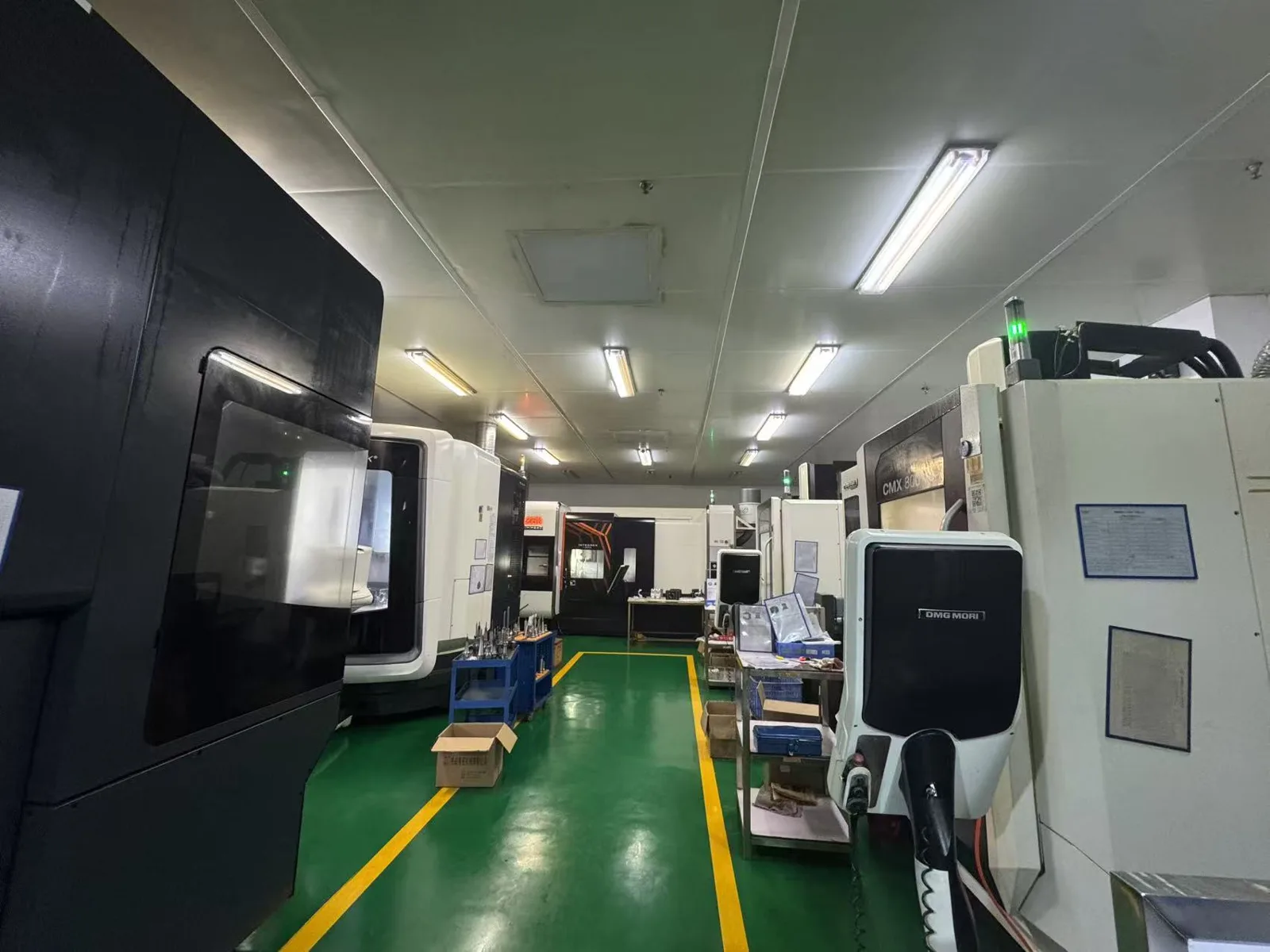
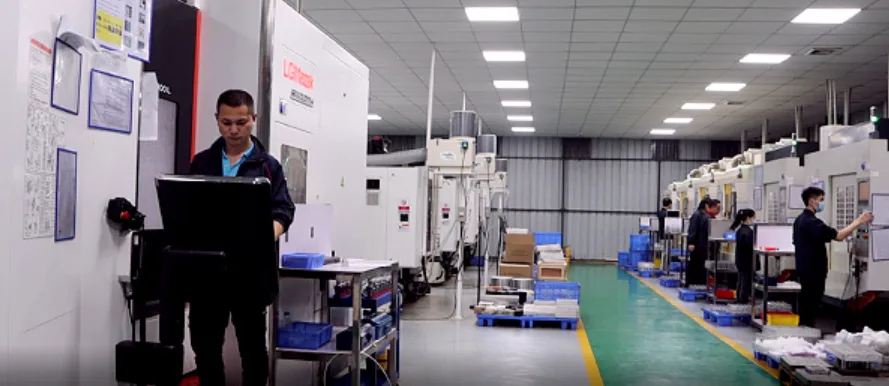
BatchMach Precision operates a precision machining facility equipped with DMG MORI and Mazak 5-axis machining centers, horizontal machining centers, CNC lathes, and mill-turn equipment. From prototypes to production orders, machining and inspection are managed in-house to maintain dimensional consistency, production visibility, and reliable delivery.
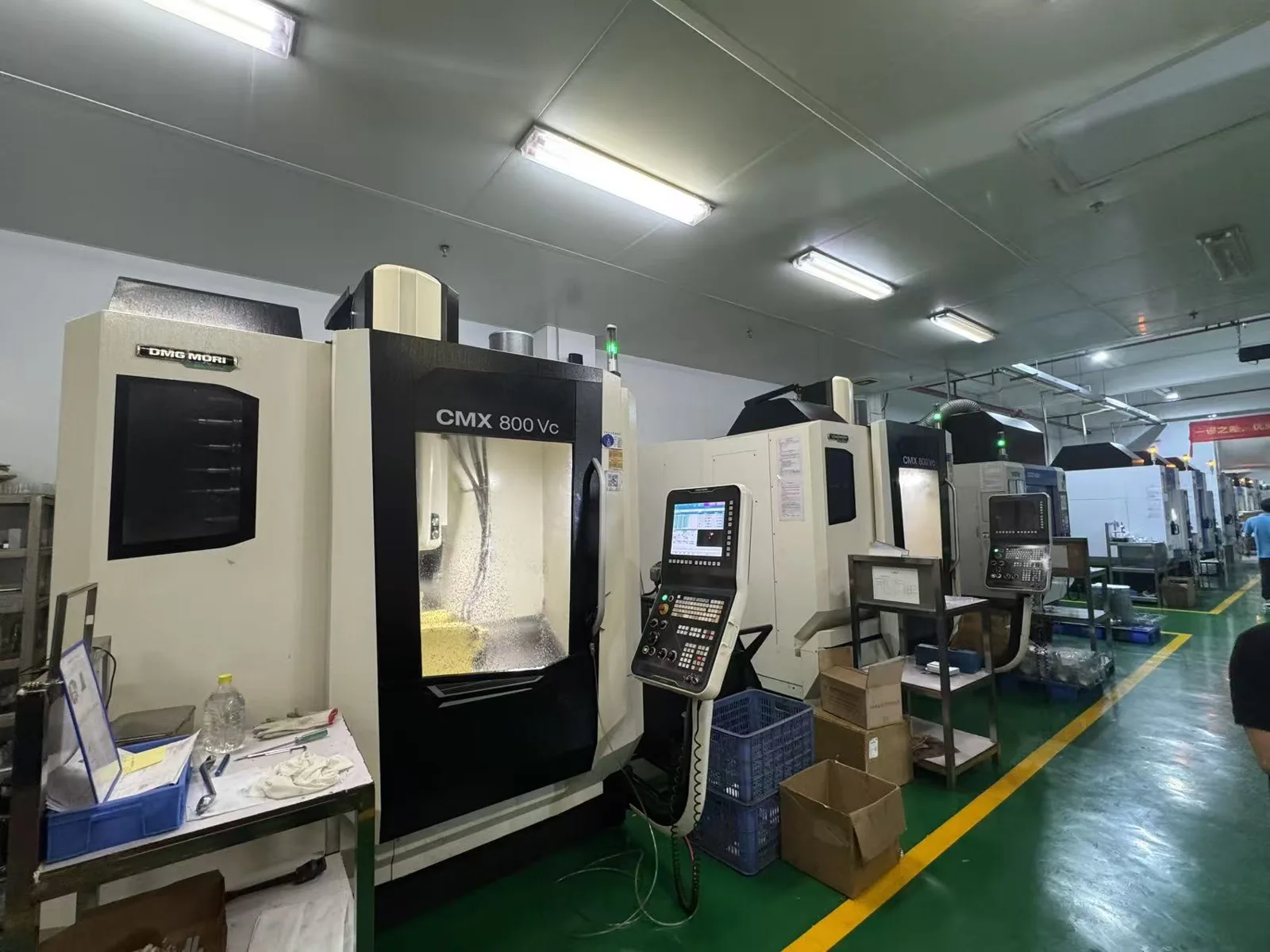
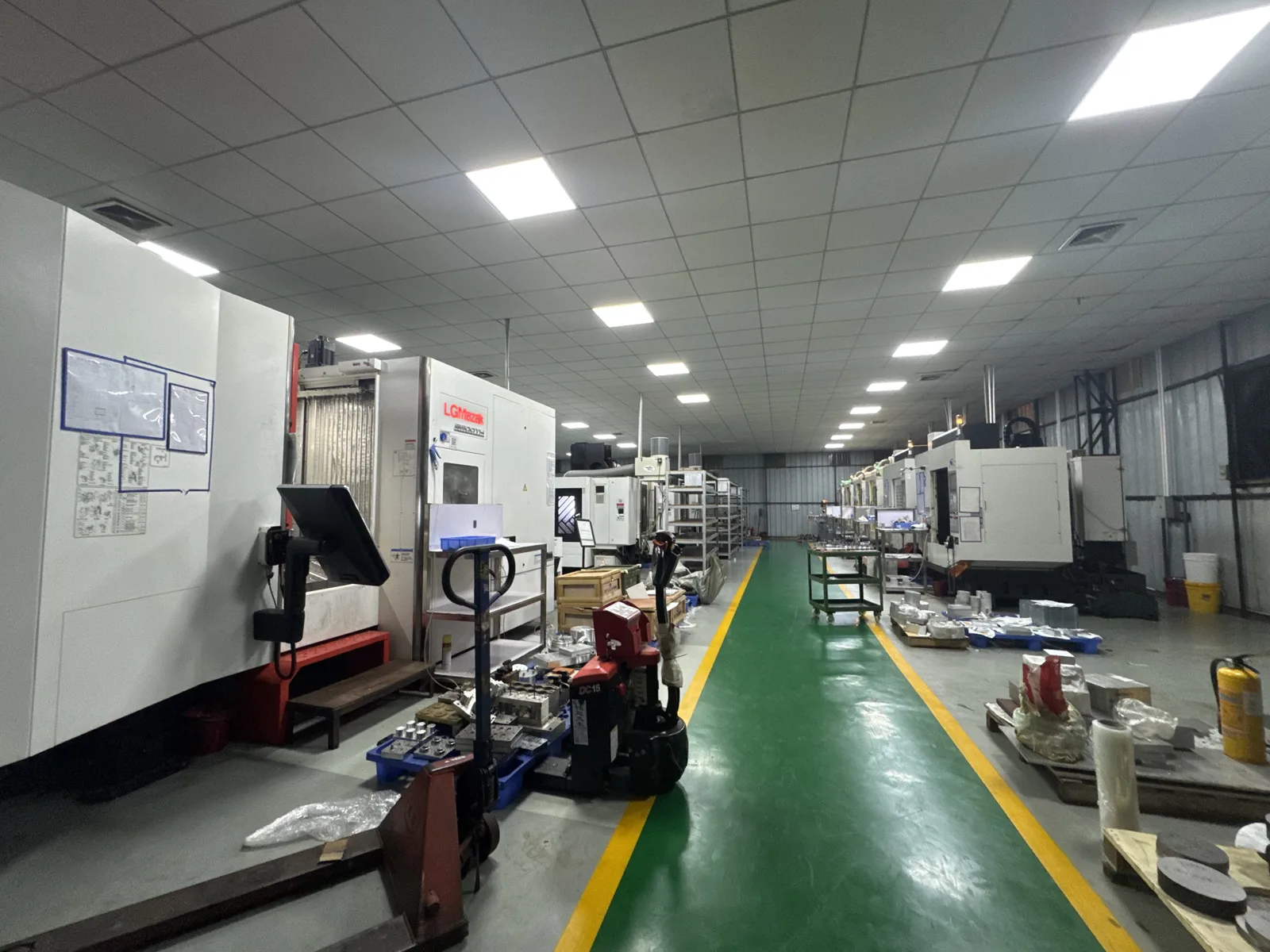
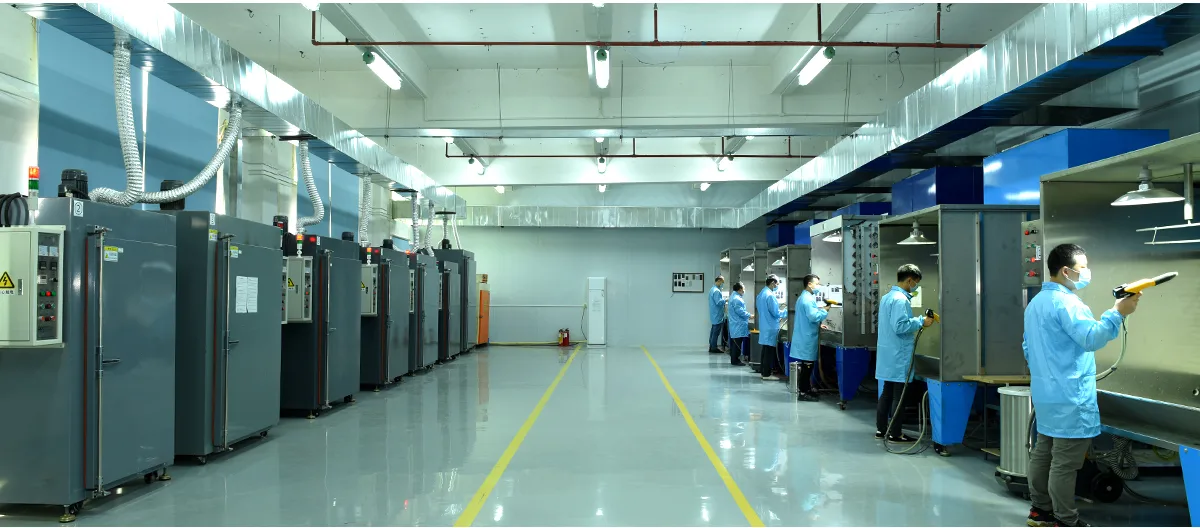
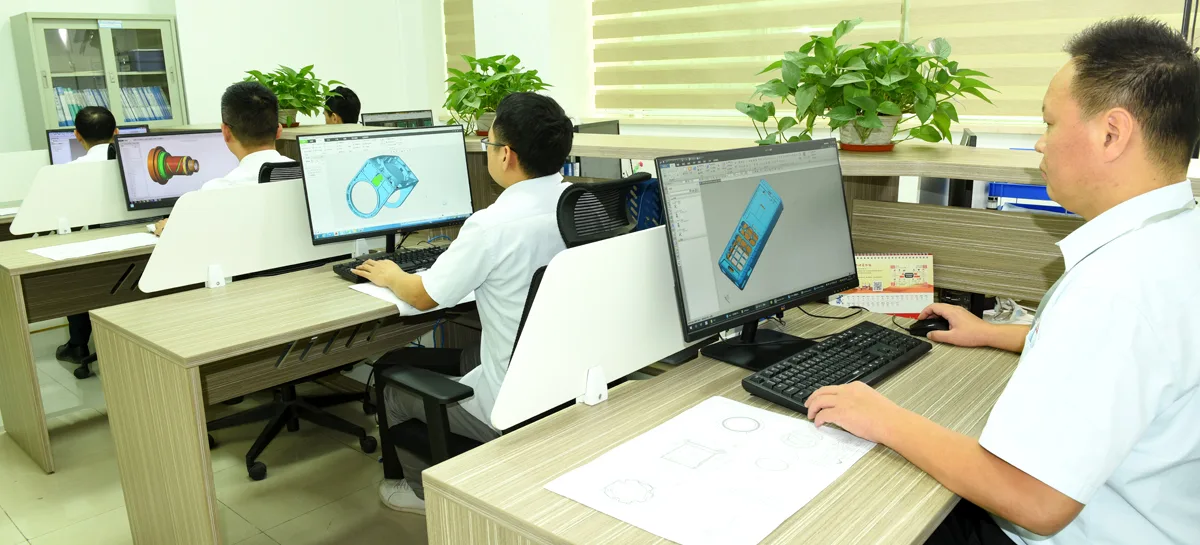
/01
After receiving your drawings, BatchMach Precision reviews datum selection, tool access, weak structures, critical fits, and inspection methods. If a design may increase machining risk or cost, we provide recommendations before production rather than waiting until problems appear during first-part machining.
/02
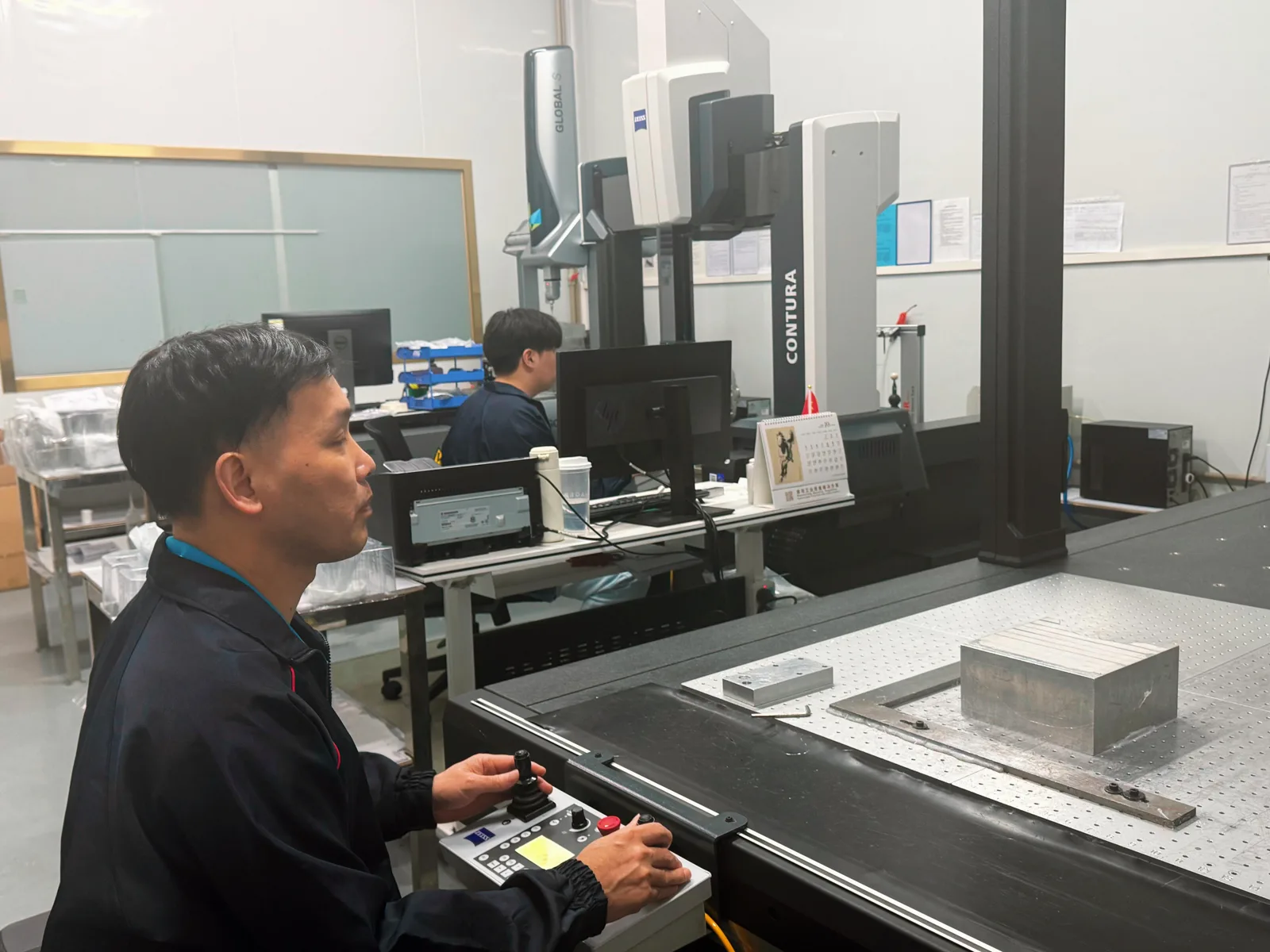
From first-part verification and in-process checks to final inspection, BatchMach Precision controls critical dimensions, mating features, and cosmetic requirements according to your drawings. Complex dimensions and positional relationships can be verified using ZEISS or Hexagon CMMs to ensure the delivered parts meet your assembly and acceptance requirements.
/03
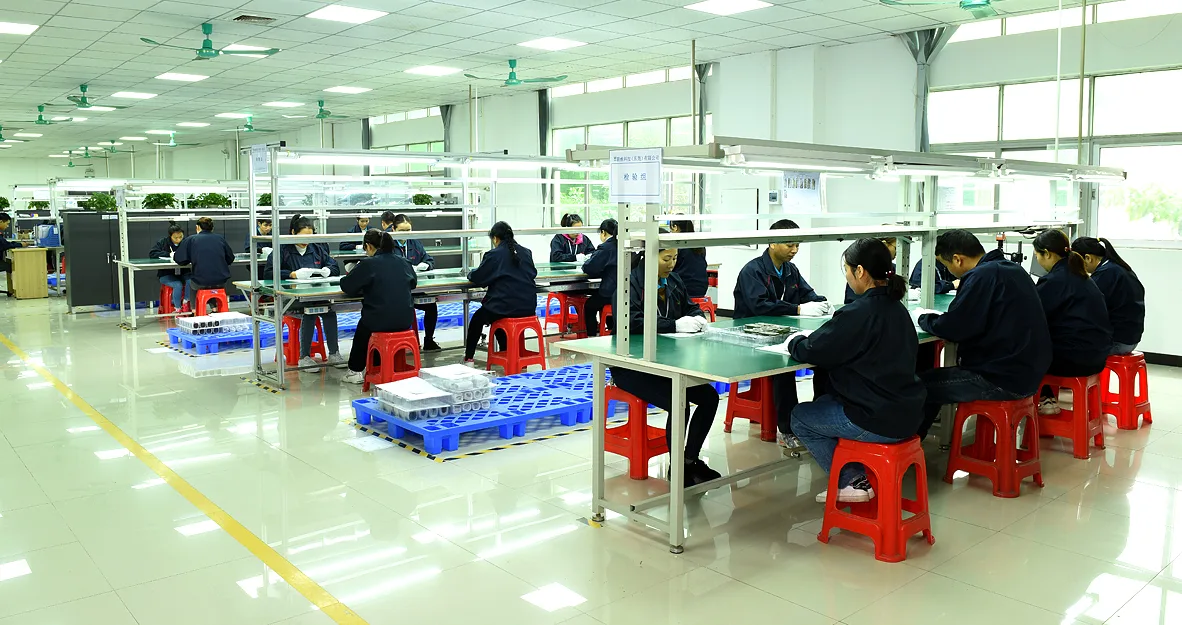
BatchMach Precision understands the different machining behavior of PA6, PA66, and glass-filled nylon. We develop suitable processes for thin walls, deep pockets, precision bores, threads, and sliding fits while identifying potential risks related to moisture absorption, deformation, burrs, and tool wear.
Ready to start your next machining project?
Get a QuotePA6 is a practical option when toughness, wear resistance, and cost are the main considerations. PA66 provides greater rigidity and thermal stability. Cast PA6 is commonly selected for larger plates, rods, and blocks, while glass-filled nylon provides greater stiffness, creep resistance, and dimensional stability.
BatchMach Precision can help compare these materials based on operating load, temperature, humidity, mating materials, and tolerance requirements. The manufacturer, color, stock size, and required material documentation are confirmed during quotation.
BatchMach Precision can achieve critical dimensional tolerances as tight as ±0.005 mm on suitable nylon parts.
Yes. Nylon absorbs moisture from the surrounding environment, which can change its dimensions, stiffness, and assembly clearances. Parts exposed to changing humidity or requiring close tolerances should account for material condition during design and inspection.
BatchMach Precision evaluates this risk based on the operating humidity, assembly method, and critical dimensions. Thin-walled parts or components requiring extensive material removal may use staged machining, low-stress fixturing, and post-unclamping inspection.
Yes. BatchMach Precision can machine glass-filled nylon based on PA6 or PA66. Glass fiber reinforcement improves stiffness, creep resistance, and dimensional stability, but it also increases tool wear and can affect edge and surface quality.
We select tooling and cutting parameters according to the glass content, part geometry, and tolerance requirements. For sliding fits, the possible abrasive effect of glass fibers on softer mating materials should also be evaluated.
Choose nylon when toughness, impact resistance, wear performance, or vibration damping is the priority. POM is generally more suitable when the part requires low moisture absorption, stable dimensions, precision clearances, or repeatable assembly.
BatchMach Precision machines both nylon and POM. Provide the operating load, humidity, temperature, type of movement, and mating materials, and our engineers can help compare the two options for your application.
Yes. CNC machining requires no mold tooling, making it suitable for functional prototypes, design validation, low-volume orders, and repeat production after the design is approved. Lead times for qualifying nylon parts can be as fast as 5 days.
For larger quantities and stable designs, the total cost of CNC machining can be compared with injection molding. BatchMach Precision evaluates the quantity, geometry, tolerance, and tooling investment before recommending a production route.
Yes. BatchMach Precision can machine nylon walls as thin as 0.8 mm, as well as deep holes, precision bores, internal and external threads, grooves, and sliding-fit features. Feasibility depends on part size, unsupported length, tool access, and workholding position.
For deformation-sensitive features, we control clamping force, cutting heat, and machining sequence. Critical bore diameters, wall thicknesses, flatness, and positional dimensions can be rechecked after the part is released from the fixture.
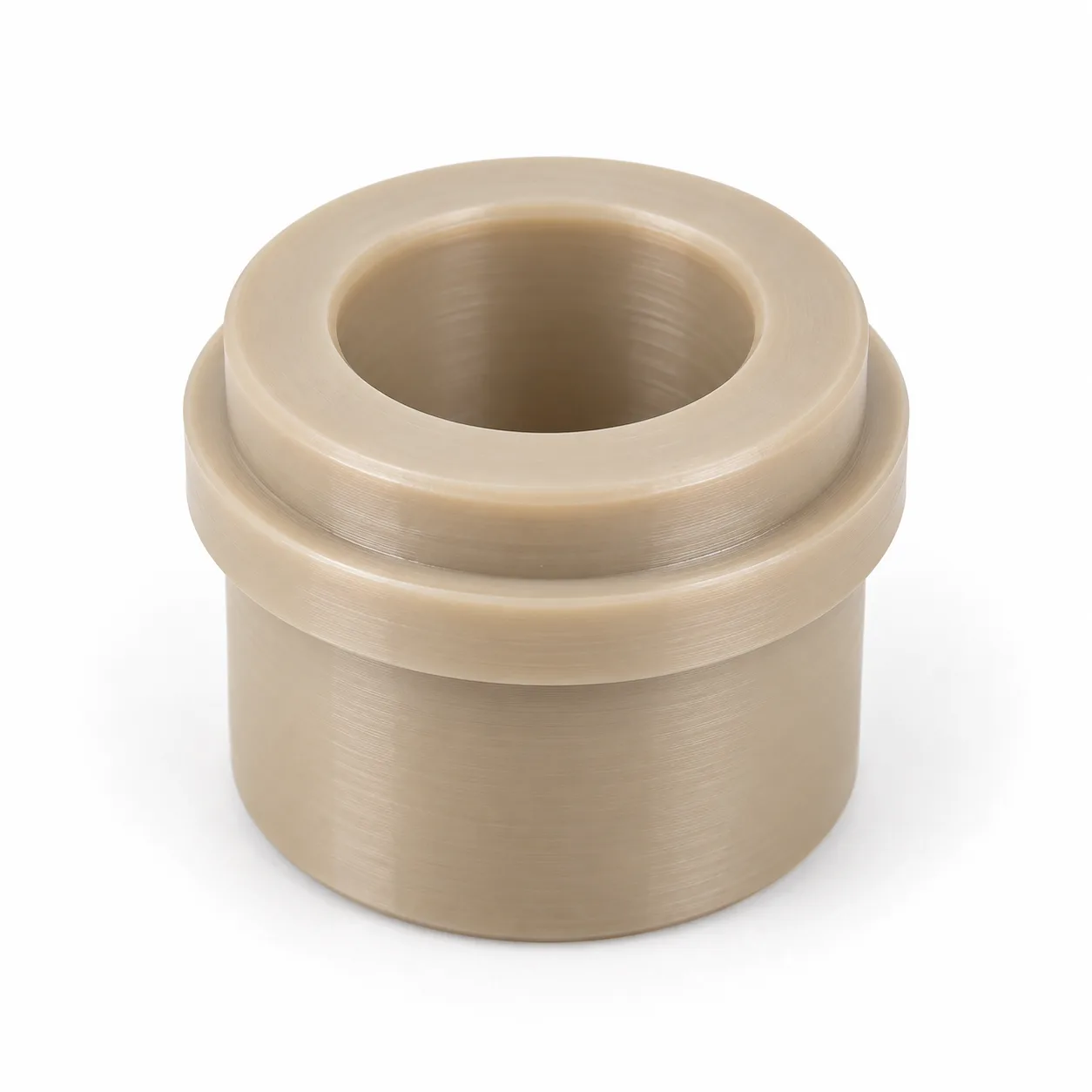
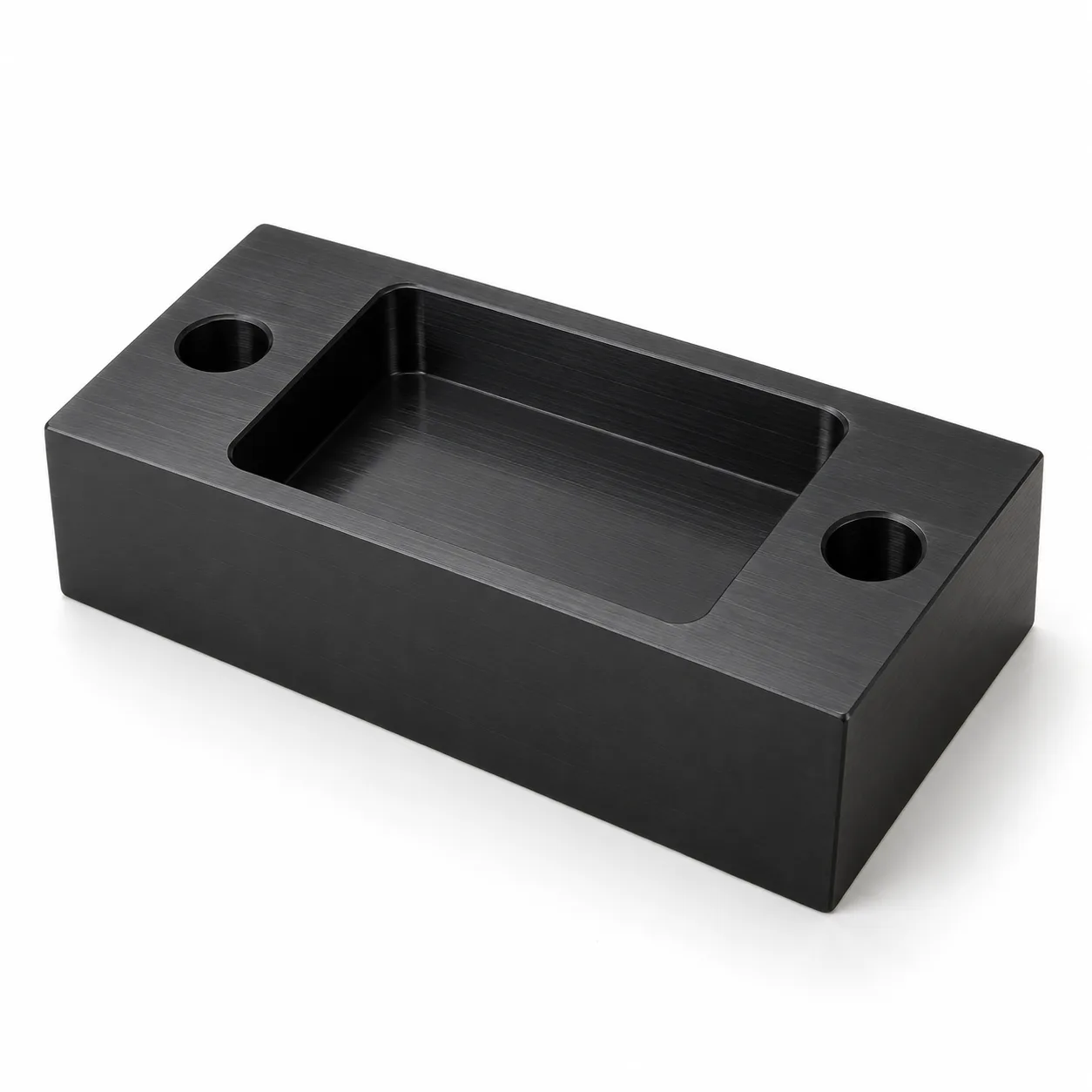
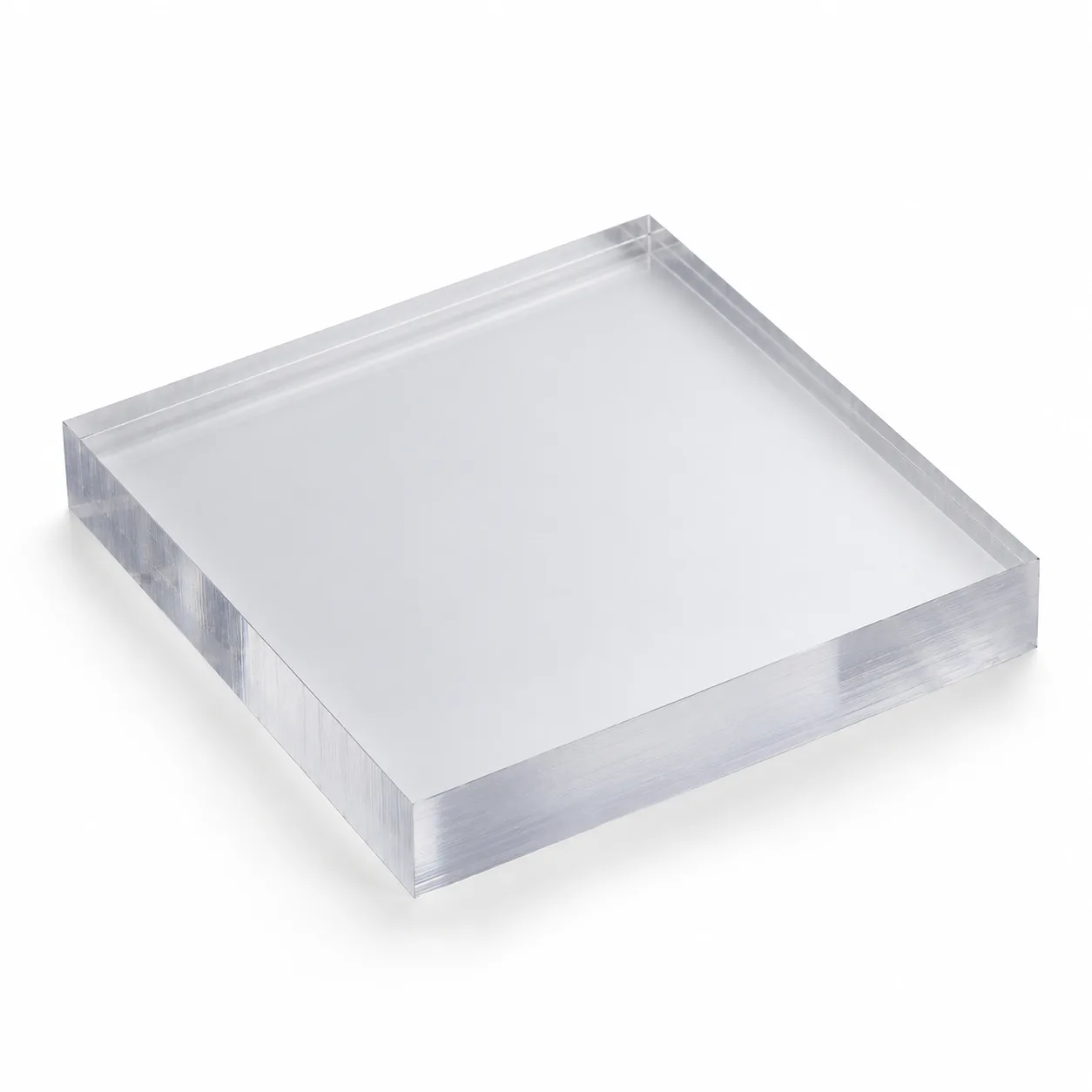
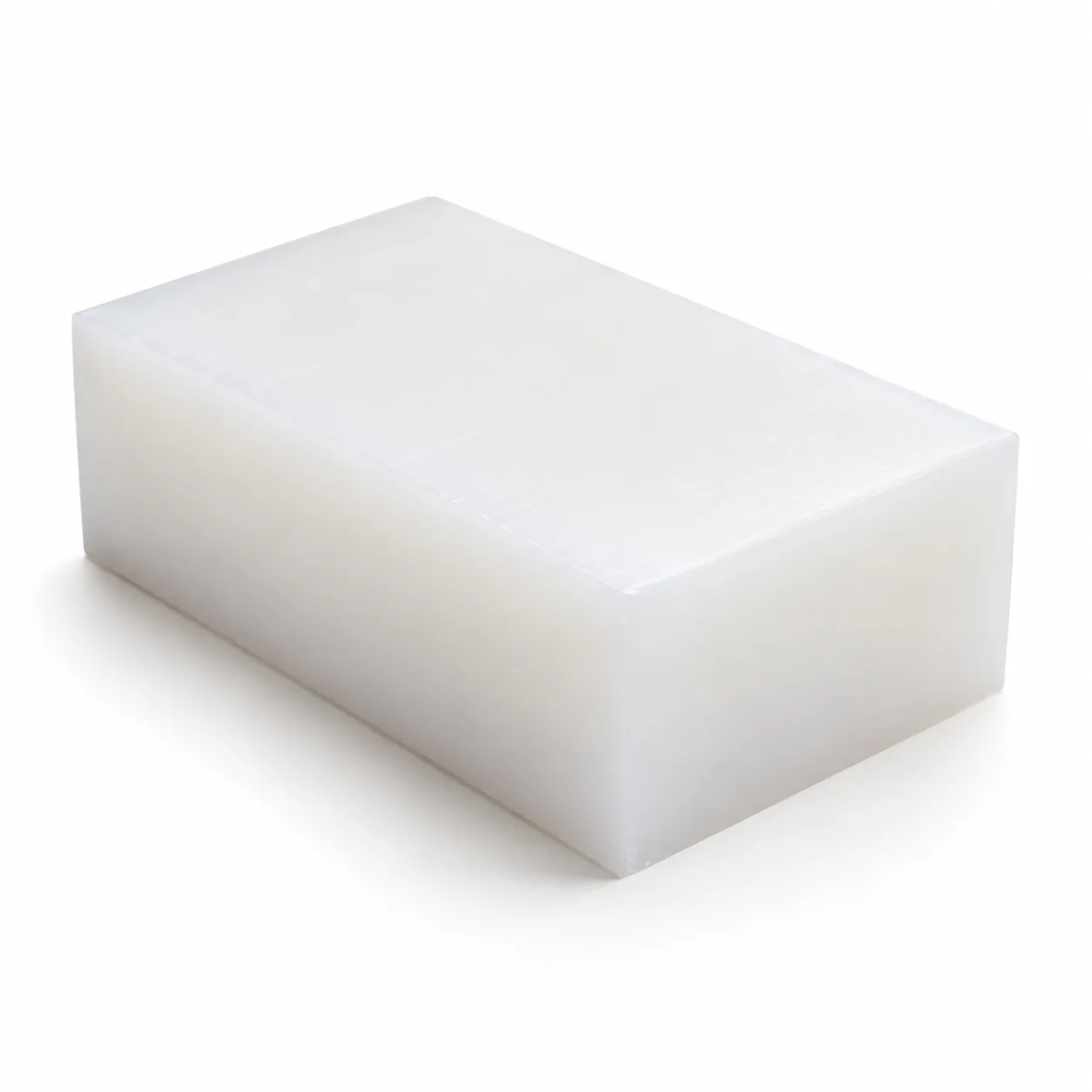
In addition to nylon, BatchMach Precision machines POM (Delrin), PEEK, acrylic (PMMA), polycarbonate (PC), and other engineering plastics. Explore our material options and CNC machining services to select a suitable plastic for your part’s strength, wear resistance, operating temperature, and appearance requirements.
Send your drawings today — get a free process evaluation, quotation within 24 hours, and flexible quarterly settlement for long-term partners.